
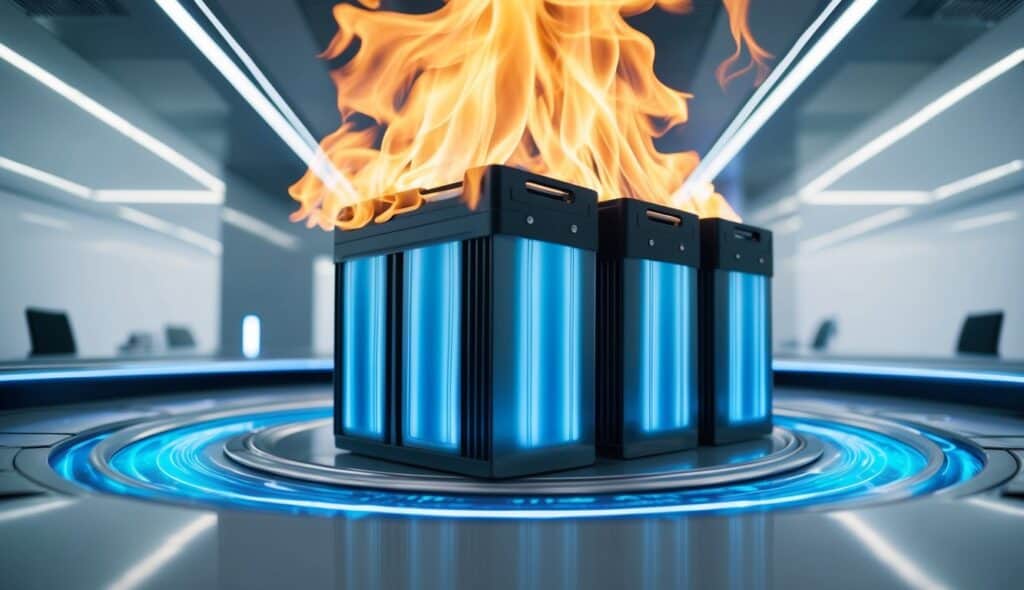
Electric car batteries can burn for hours or even days due to their unique chemical composition and energy density. Lithium-ion battery fires in electric vehicles are difficult to extinguish because the cells can reignite repeatedly as heat spreads through the battery pack. This prolonged burning poses challenges for firefighters and raises safety concerns.
The risk of electric vehicle battery fires is often overblown compared to gas car fires. Studies show EVs actually have a lower fire risk than traditional vehicles. Still, when EV fires do occur, they require special handling. Firefighters need large amounts of water and may need to submerge the entire battery pack to fully extinguish the flames.
Understanding why EV batteries burn so long can help improve safety measures. Damage to battery cells from crashes is a common cause of fires. Manufacturers are working on new battery designs and fire suppression systems to reduce risks and make electric vehicles even safer.
Understanding Electric Vehicle Batteries
Electric vehicle batteries are complex systems that store and release energy to power cars. They use advanced technology to provide long-lasting, reliable power while incorporating safety features.
Composition of Lithium-Ion Batteries
Lithium-ion batteries are the most common type used in electric vehicles. They contain a positively charged cathode and a negatively charged anode. These are separated by an electrolyte solution.
The cathode is often made of lithium metal oxides. The anode is typically graphite. The electrolyte allows lithium ions to move between the cathode and anode during charging and discharging.
This movement of ions creates an electric current that powers the vehicle. Different materials can be used for the cathode and anode to change battery performance.
Energy Storage and Release
Electric vehicle batteries store energy through a chemical process. When charging, lithium ions move from the cathode to the anode. This stores energy in the battery.
During use, the ions flow back to the cathode. This releases the stored energy as electricity to power the car’s motor and systems.
The amount of energy a battery can store affects the vehicle’s driving range. Larger batteries can store more energy but add weight to the car.
Charging and discharging cycles can affect battery life over time. Extreme temperatures can also impact how well the battery works.
Battery Design and Safety Features
Electric vehicle batteries are designed with safety in mind. They use special materials and structures to prevent issues like overheating or short circuits.
Many batteries have a cooling system to keep cells at the right temperature. This helps stop thermal runaway, where one cell overheats and causes others to heat up too.
Batteries also have safety switches that can cut power if there’s a problem. Some use fire-resistant materials to lower fire risks.
The battery pack is often placed in a strong case. This protects it during crashes and keeps it away from passengers.
Check out How Many Amps Are Needed to Charge an Electric Car?
Causes of Electric Vehicle Battery Fires
Electric vehicle (EV) battery fires stem from several key factors. These include thermal runaway, charging issues, and physical damage to battery cells.
Thermal Runaway Process
Thermal runaway happens when a battery cell overheats. This can start a chain reaction. The heat spreads to nearby cells. Each affected cell releases more heat. This cycle keeps going. It can lead to fire or explosion.
Thermal runaway often begins with a single faulty cell. The cell might have a tiny defect. Or it could be damaged by impact. Once it starts, thermal runaway is hard to stop.
Signs of thermal runaway include:
- Rapid temperature rise
- Smoke or gas release
- Swelling of the battery pack
Risks Associated with Overcharging and Improper Charging
Charging problems can cause EV battery fires. Overcharging is a big risk. It pushes too much energy into the cells. This can lead to overheating.
Improper charging also poses dangers. Using the wrong charger can damage cells. Charging at very low temperatures is risky too. It can cause lithium plating inside the battery.
Safe charging tips:
- Use the right charger for your EV
- Don’t charge in extreme cold
- Follow the manufacturer’s guidelines
Impact of Battery Damage and Defects
Physical damage to EV batteries is a fire risk. Crashes can rupture cells. Even small punctures are dangerous. They let air and moisture into the battery pack.
Manufacturing defects also cause problems. Tiny flaws in cells can grow over time. This may lead to short circuits. Quality control is crucial in battery production.
Common battery defects include:
- Separator issues
- Contaminants in the electrolyte
- Poorly made electrical connections
Regular battery checks can catch some issues early. But not all damage is visible from the outside.
Read How to Charge an Electric Car at Home Without a Garage?
Thermal Management in EVs
Thermal management plays a key role in electric vehicle performance and safety. It helps regulate battery temperature to optimize efficiency and prevent fires.
Role of Thermal Management Systems
EV thermal management systems keep batteries at ideal temperatures. They cool batteries when hot and warm them in cold weather. This protects battery cells and extends their life.
The systems use coolant fluids, fans, and heat exchangers. They move heat away from batteries during charging and driving. Some EVs have advanced liquid cooling that circulates coolant through the battery pack.
Thermal management also regulates motor and electronics temperatures. This prevents overheating of critical components. It allows EVs to maintain power output in extreme conditions.
Advancements in Thermal Management Technologies
New thermal management tech improves EV range and charging. Some systems use phase change materials to absorb heat. Others employ heat pumps for more efficient temperature control.
Smart thermal management adjusts based on driving conditions. It can pre-heat batteries before trips in cold weather. This boosts performance and reduces energy use.
Some EVs now use two-way cooling. This lets them transfer heat between the battery and cabin. It can warm the interior using battery heat in winter.
Advanced materials like graphene improve heat transfer in batteries. This allows faster charging and better temperature regulation.
Emergency Response to EV Fires
Electric vehicle fires pose unique challenges for emergency responders. These fires require specialized knowledge and equipment to handle safely and effectively.
Challenges in Extinguishing Electric Car Battery Fires
EV battery fires burn much hotter than traditional car fires, reaching temperatures over 3000°F. They also reignite easily, even after seeming extinguished. Firefighters need large amounts of water to cool the battery pack.
A typical EV fire may require 3,000 to 8,000 gallons of water. This is far more than most fire trucks carry. Crews often set up water shuttles or find hydrants to meet these high water demands.
Battery fires can last for hours or even days. Firefighters may need to monitor the vehicle long after the initial flames are out. This ties up resources for extended periods.

Class D Fire Extinguishers and Toxic Fumes
Standard fire extinguishers don’t work well on EV battery fires. Class D extinguishers for metal fires are more effective. These use dry powder agents to smother the flames.
EV fires release toxic fumes and gases. These include hydrogen fluoride and other harmful chemicals. Firefighters must wear full protective gear and breathing apparatus.
Nearby residents may need to evacuate due to these fumes. Emergency services should be ready to set up safety zones around burning EVs.
Educating Emergency Services
Fire departments are updating their training to deal with EV fires. They learn to identify electric vehicles and understand battery locations. New protocols cover how to safely approach and handle these fires.
Some key points in EV fire training:
- Don’t cut into battery packs
- Use thermal imaging to find hot spots
- Lift and tilt the vehicle to improve water access
- Submerge the battery in water when possible
Ongoing education helps keep emergency responders safe and effective when dealing with EV incidents.
Check out How Often Do You Have to Charge an Electric Car?
Comparative Fire Risks
Electric and gas-powered vehicles both pose fire risks, but the nature and frequency of these risks differ. Let’s examine how EV fires compare to conventional vehicle fires in terms of likelihood and real-world data.
EV Fires Versus Gas-Powered Vehicle Fires
EV fires tend to be more intense and longer-lasting than gas vehicle fires. This is due to the chemical composition of lithium-ion batteries. When an EV battery ignites, it can burn for hours and reignite even after being extinguished.
Gas vehicle fires usually start in the engine or fuel system. They can spread quickly but are often easier to put out than EV fires. Gasoline is highly flammable, leading to rapid combustion.
EV fires are harder to extinguish and require special techniques. Firefighters need specific training to handle these incidents safely.
Statistics and Real-World Incidences
Studies show that EVs are less likely to catch fire than gas-powered cars. The National Fire Protection Association reports that gas vehicles have a 1 in 19,000 chance of catching fire. For EVs, it’s about 1 in 120,000.
A report by AutoInsuranceEZ found:
- Hybrid vehicles: 3,475 fires per 100,000 sales
- Gas vehicles: 1,530 fires per 100,000 sales
- Electric vehicles: 25 fires per 100,000 sales
These numbers suggest EVs have a lower fire risk. But when EV fires do occur, they often get more media attention due to their unique challenges.
Check out Can You Drive an Electric Car Through Water?
Future of Electric Vehicle Battery Technology
New battery technologies aim to make electric cars safer and more efficient. These advances could transform how we store and use energy in vehicles and beyond.
Solid-State Batteries and Safety
Solid-state batteries are a promising innovation for electric vehicles. They use solid electrolytes instead of liquid ones. This makes them less likely to catch fire or explode.
Solid-state batteries can also store more energy in a smaller space. This means electric cars could go farther on a single charge. They might charge faster too.
Some car makers plan to use solid-state batteries in their vehicles soon. These batteries could make electric cars safer and more practical for everyday use.
Large-Scale Energy Storage: Megapacks
Megapacks are big battery systems that can store a lot of energy. They’re not for cars, but they help make electric vehicles more useful.
Megapacks can store extra energy from wind and solar power. This energy can charge cars when it’s needed. They also help keep the power grid stable.
Some companies are building large megapack facilities. These can power thousands of homes and charge many electric cars. As more people buy electric cars, megapacks will become more important.
Check out Can a Portable Generator Charge an Electric Car?
Health and Environmental Concerns
Electric vehicle (EV) battery fires and disposal pose some unique health and environmental risks. These issues require careful management to ensure the safety of people and ecosystems.
Hazardous Emissions from Battery Fires
EV battery fires can release toxic fumes. These fumes may contain carbon monoxide, hydrogen fluoride, and hydrogen chloride. Breathing in these gases can be very dangerous.
Carbon monoxide is odorless but can cause dizziness and even death. Hydrogen fluoride and chloride irritate the eyes, nose, and lungs.
Firefighters need special training to handle EV fires safely. They must use lots of water and wear protective gear. The fires can last for hours or days due to chemical reactions in the batteries.
Disposal and Recycling of EV Batteries
EV batteries contain valuable metals like lithium and cobalt. Proper recycling helps recover these materials. It also prevents toxic chemicals from harming the environment.
Recycling EV batteries is complex and expensive. The process involves breaking down batteries and extracting useful components. This requires specialized facilities.
Many countries lack rules for EV battery recycling. As more EVs hit the roads, battery waste will increase. Developing safe, efficient recycling methods is crucial.
Improper disposal can lead to soil and water pollution. Toxic metals may leak into the ground. This can harm plants, animals, and human health.
Frequently Asked Questions
Electric vehicle battery fires raise important safety concerns. Understanding the causes, risks, and proper responses can help owners and emergency responders handle these situations.
What causes thermal runaway in electric vehicle batteries?
Thermal runaway occurs when a battery cell overheats and triggers a chain reaction. Damage, manufacturing defects, or charging issues can start this process. As one cell heats up, it affects nearby cells. This leads to rapid temperature increases and potential fires.
Can an electric vehicle battery catch fire when it’s not in use?
Yes, electric car batteries can ignite even when parked. Internal shorts, cell degradation, or external heat can trigger fires in idle vehicles. Proper storage and regular inspections help reduce these risks.
What are the common reasons behind electric vehicle battery fires?
Manufacturing defects top the list of causes. Other reasons include physical damage from crashes, overcharging, and exposure to extreme temperatures. Using incompatible chargers or modifying the battery system also increases fire risks.
How long can an electric vehicle battery continue to burn in case of a fire?
Electric car fires can burn for hours or even days. The energy stored in the battery cells fuels prolonged burning. Firefighters often need special tactics and large amounts of water to fully extinguish these fires.
What should be done if an electric car catches fire?
Move away from the vehicle immediately. Call emergency services right away. Do not try to put out the fire yourself. Warn others to keep a safe distance. Inform responders that it’s an electric vehicle fire for proper handling.
How does the puncturing of lithium batteries lead to fires?
When a lithium battery is punctured, it can cause an internal short circuit. This leads to rapid heating and potential ignition of the flammable electrolyte inside. The breach also allows oxygen to enter, further fueling the fire.
Conclusion
Electric car battery fires are rare but can be challenging to extinguish. The risk of fire is lower for EVs compared to gas-powered cars. Only about 1 in 83,333 EVs catch fire, while 1 in 1,000 gas cars do.
Proper care and maintenance help extend EV battery life. Avoiding damage to the battery pack is crucial for preventing fires. Serious crashes can rupture battery cells, leading to overheating.
Modern tunnel ventilation systems can handle both electric and gas car fires effectively. This shows that infrastructure is adapting to accommodate EVs safely.
While EV fires can burn longer, they are not inherently more dangerous than traditional car fires. Ongoing research and improved safety measures continue to make electric vehicles safer.
As EV technology advances, battery designs and materials will likely become even more fire-resistant. This will further reduce the already low risk of electric car fires.
You may also like:
- Is it Cheaper to Charge an Electric Car on 110 or 220?
- What Happens If Your Electric Car Runs Out of Battery in the Middle of Nowhere?

Hi, I’m Marybeth, an electric car enthusiast living in New York in the USA. As the owner of electriccartalks.com, I love sharing my knowledge on EV tips, battery maintenance, and charging solutions. As a proud Tesla owner, I blend my personal experiences with professional insights to offer valuable information to fellow EV enthusiasts. Through my articles, I aim to empower others to make informed decisions about their electric vehicles. Read more