
Electric car batteries have raised safety concerns due to their potential fire risks and environmental impacts. These large lithium-ion batteries power electric vehicles (EVs), providing long driving ranges and quick acceleration. But they also come with some drawbacks.
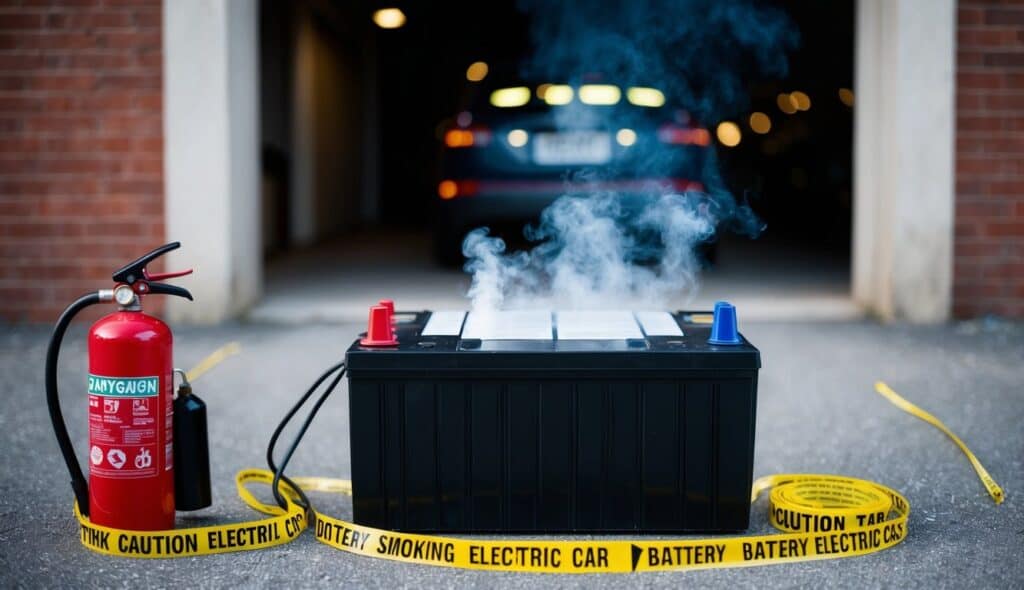
The main danger of EV batteries is their risk of catching fire, which can be difficult to extinguish. This risk stems from the flammable electrolyte inside lithium-ion cells. If damaged or faulty, the batteries can ignite and burn very hot. EV battery fires are rare but can be intense when they happen.
Another safety issue is the weight of EV batteries. They make electric cars much heavier than gas-powered vehicles. This extra weight can increase damage in crashes with lighter cars. Despite these risks, EV batteries have improved in safety over time. Car makers keep working on ways to make them safer and more stable.
Overview of Electric Vehicle Batteries
Electric vehicle batteries are complex power systems that enable EVs to run. They come in different types and contain various important components.
Components of EV Batteries
EV batteries have several key parts. The cathode uses metals like cobalt, nickel, and manganese. The anode is often made of graphite. Lithium ions move between the cathode and anode to store and release energy.
A liquid electrolyte allows ion movement. Separators keep the cathode and anode apart. The battery management system controls charging and monitors performance.
Cells are grouped into modules. Multiple modules form the full battery pack. This pack is housed in a sturdy casing to protect the components.
Types of EV Batteries
Most EVs use lithium-ion batteries. These offer good energy density and long life. Nickel-metal hydride batteries are found in some hybrid cars. They are cheaper but less energy-dense.
Solid-state batteries are an emerging technology. They replace the liquid electrolyte with a solid. This could make them safer and more energy-dense.
Some carmakers are exploring lithium-sulfur and lithium-air batteries. These may offer much higher energy density in the future. For now, lithium-ion remains the top choice for electric vehicles.
Dangers Associated with EV Batteries
Electric vehicle batteries come with some important safety risks. These include the potential for thermal runaway, chemical hazards, and fire dangers.
Thermal Runaway Risk
Thermal runaway happens when a battery cell overheats and causes a chain reaction. This can make the battery get very hot very fast. It often leads to fires or explosions.
Thermal runaway can start from things like:
- Battery damage
- Manufacturing defects
- Extreme heat
Once it starts, it’s hard to stop. The heat spreads to nearby cells. This makes the problem worse.
Carmakers try to prevent thermal runaway. They use cooling systems and safety features. But the risk is still there.
Chemical Exposure and Toxicity
EV batteries have toxic chemicals inside. These can be bad for people and the environment if they leak.
Some dangers of battery chemicals:
- Skin burns
- Lung damage if breathed in
- Harm to water and soil
Battery recycling also brings risks. Workers can be exposed to harmful stuff. Proper safety gear is a must.
EV fires make toxic smoke. This can hurt people nearby. It’s a big risk for firefighters.
Battery Fire Hazards
EV battery fires are hard to put out. They can burn for hours or even days. The fires are very hot and can reignite.
Why EV fires are tough:
- Regular water doesn’t always work
- Special foam is often needed
- Fires can start again after seeming to be out
Firefighters need special training for EV fires. They must know how to handle these unique risks.
EV fires can happen from crashes or while charging. Some have started in parked cars for no clear reason.
Environmental and Health Impacts
Electric car batteries have major effects on the environment and human health. These impacts start with raw material extraction and continue through manufacturing, use, and disposal.
Material Sourcing and Ecosystem Damage
Mining for battery materials harms ecosystems. Lithium extraction uses large amounts of water, which can dry up lakes and rivers. This damages plant and animal habitats. Cobalt mining in the Democratic Republic of Congo causes soil and water pollution. It also leads to deforestation as land is cleared for mines.
Some mining practices expose workers to toxic substances. This can cause health problems like lung disease. Local communities may face similar risks from pollution.
Nickel mining for batteries creates air and water pollution. It can contaminate drinking water sources. The acids used in processing nickel ore harm soil quality and plant growth.
Carbon Emissions and Climate Change Implications
Making electric car batteries creates significant carbon emissions. The energy-intensive process often relies on fossil fuels. This adds to climate change in the short term.
Battery production can generate more emissions than making gas-powered cars. But electric cars produce fewer emissions over their lifespan. They create no tailpipe emissions when driven.
As power grids use more renewable energy, battery production will become cleaner. Improved recycling can also cut emissions by reducing the need for new raw materials.
Impact on Air Quality and Public Health
Electric cars improve local air quality. They emit no exhaust, which helps reduce smog in cities. This can lower rates of asthma and other breathing problems.
But battery production does create air pollution. Making battery materials releases particulates and toxic gases. These can harm the lungs and hearts of people living near factories.
Recycling batteries also poses health risks if not done safely. Improper recycling can release lead and other toxic metals into the air and water. This threatens the health of workers and nearby communities.
Battery Lifecycle and Sustainability
Electric car batteries go through several stages from production to disposal. Their lifecycle impacts the environment and raises questions about long-term sustainability.
Challenges in EV Battery Recycling
Recycling EV batteries is complex. The process involves breaking down batteries to extract valuable metals like lithium and cobalt. This can be dangerous and costly.
Current recycling methods are not very efficient. They often recover only a small portion of the materials. This leads to waste and lost resources.
Another issue is the lack of standardized battery designs. Different car makers use different battery types. This makes creating a one-size-fits-all recycling process hard.
Strategies for a Circular Economy
A circular economy aims to reuse and recycle materials. For EV batteries, this means finding new uses after they can’t power cars anymore.
One strategy is using old car batteries for energy storage. They can store power from solar panels or wind turbines. This gives the batteries a second life before recycling.
Car makers are also working on better battery designs. They’re trying to make batteries easier to take apart and recycle. Some companies are even looking at ways to reuse battery parts in new batteries.
Technological Advances in Battery Lifespan
New tech is making EV batteries last longer. This helps reduce the need for new batteries and cuts down on waste.
Scientists are working on batteries that can hold more power and charge faster. These advances mean cars can go further on a single charge. This reduces the stress on the battery and helps it last longer.
Some car makers are using software to manage battery health. These systems can predict when a battery might fail. They also help drivers use their batteries more efficiently.
Better cooling systems are also being developed. They keep batteries at the right temperature. This stops them from wearing out too quickly.
Regulatory and Safety Standards
Electric car batteries face strict rules and safety checks. These standards aim to protect drivers, passengers, and emergency responders.
Insurance and Safety Regulations
The Insurance Institute for Highway Safety tests electric vehicles. They look at crash protection and accident avoidance. EV makers must follow strict battery rules. These cover design, materials, and safety systems.
Battery manufacturing has special guidelines. They focus on quality control and safe production. Factories must meet high standards to reduce defects.
Many countries have laws for EV batteries. These cover things like fire resistance and crash protection. Carmakers must prove their batteries are safe before selling EVs.
Advancements in EV Safety
Car companies are always working to make EV batteries safer. New tech helps prevent fires and explosions. Some batteries now have special coatings to stop fires from spreading.
Better battery management systems keep tabs on temperature and charge levels. This helps catch problems early. Some new EVs can even warn drivers of potential battery issues.
Emergency responders get special training for EV accidents. They learn how to handle high-voltage batteries safely. New tools help them put out battery fires quickly.
Electric Vehicles in the Energy Landscape
Electric cars are changing how we use and store energy. They connect to power grids, compete with gas cars, and use new tech to save power.
Renewable Energy Integration
EVs can work well with solar and wind power. Drivers can charge cars when renewable energy is high. This helps balance the power grid. Some car batteries even send power back to the grid when needed. This two-way flow helps make the most of clean energy.
Smart charging systems let EVs charge at off-peak times. This cuts stress on the grid. It also saves money for drivers. As more EVs hit the roads, power companies are planning ahead. They’re upgrading systems to handle the extra load from car charging.
Comparing EVs and Internal Combustion Engines
EVs are more energy-efficient than gas cars. They convert about 60% of energy to motion. Gas cars only use about 20%. EVs also produce zero tailpipe emissions. This helps cut air pollution in cities.
The energy mix powering EVs matters. In areas with clean grids, EVs clearly beat gas cars on emissions. Even with some coal power, EVs still come out ahead over their lifetime. As grids get cleaner, the gap widens.
EVs cost less to run than gas cars. Electricity is cheaper than gas per mile. EVs also need less maintenance. No oil changes or spark plugs to replace.
Innovations in Energy Storage and Regenerative Braking
New battery tech is making EVs better. Solid-state batteries promise more range and faster charging. They’re safer too. Other new designs use less rare materials. This could lower costs and environmental impact.
Regenerative braking turns motion back into electricity. It captures energy that would be lost as heat in regular brakes. This boosts range and efficiency. Some systems can recover up to 70% of braking energy.
Power storage goes beyond the car. Used EV batteries can have a second life. They can store solar power for homes or back up the grid. This helps make the most of these resources.
Frequently Asked Questions
Electric car batteries raise important safety and environmental concerns. These questions address key issues about their risks, materials, and impacts.
What are the potential risks associated with electric car batteries in the event of a collision?
In a crash, electric car batteries can pose fire and electric shock risks. The battery cells may rupture, leading to short circuits or chemical leaks. This can cause fires that are hard to put out. Emergency responders need special training to handle crashed electric vehicles safely. They must take care to avoid electric shocks from exposed high-voltage parts.
How do electric car batteries impact the environment during their lifecycle?
Mining battery materials like lithium and cobalt can harm ecosystems. The mining process uses a lot of water and energy. Battery production creates carbon emissions. But electric cars produce fewer emissions over their lifespan compared to gas cars. Recycling old batteries helps reduce environmental impacts. It lets valuable materials be reused in new batteries.
What materials are used in electric car batteries, and why might they be considered hazardous?
Electric car batteries use lithium, cobalt, nickel, and other metals. These materials can be toxic if not handled properly. Lithium is very reactive with water. It can catch fire or explode if exposed. Cobalt dust can harm lungs if inhaled. The electrolyte liquid in batteries is flammable. It can cause burns if it leaks out.
What is the likelihood of electric vehicle battery fires compared to conventional vehicles?
Electric vehicle fires are rare. They happen less often than fires in gas-powered cars. But electric car fires can be harder to put out. They can reignite hours or days later. Special firefighting methods are needed for electric vehicle fires. Firefighters use lots of water to cool the battery pack.
Can electric car batteries have adverse effects on human health?
Normal use of electric cars does not pose health risks from batteries. The battery pack is sealed inside the vehicle. Battery production workers may face health risks. They can be exposed to toxic materials or dust. Recycling workers also need safety gear. They can encounter hazardous materials when breaking down old batteries.
What safety concerns exist regarding the disposal and recycling of electric car batteries?
Improper disposal of batteries can lead to toxic chemical leaks. This can pollute soil and water. Recycling plants need special equipment to handle batteries safely. Workers must avoid electric shocks and chemical exposure. Transportation of used batteries also poses risks. Damaged batteries can catch fire during shipping.
Conclusion
Electric car batteries come with some risks that need careful management. Fire hazards exist, especially if batteries are damaged or defective. Proper safety systems and handling procedures help reduce these dangers.
Toxic materials in batteries pose environmental concerns. Responsible recycling and disposal are crucial as more EVs hit the roads. Improved battery tech and recycling methods can lessen these impacts over time.
EV batteries aren’t inherently more dangerous than gas cars. Both have risks that require safety precautions. As the technology evolves, battery safety will likely continue to improve.
Drivers should follow manufacturer guidelines for battery care and maintenance. This helps maximize safety and battery life. With proper handling, electric vehicles can provide safe, clean transportation for many years.
Ongoing research aims to develop safer, more eco-friendly EV batteries. These advances may address current concerns about battery dangers in the future.

Hi, I’m Marybeth, an electric car enthusiast living in New York in the USA. As the owner of electriccartalks.com, I love sharing my knowledge on EV tips, battery maintenance, and charging solutions. As a proud Tesla owner, I blend my personal experiences with professional insights to offer valuable information to fellow EV enthusiasts. Through my articles, I aim to empower others to make informed decisions about their electric vehicles. Read more