
Electric vehicles are reshaping how we think about driving distances, and Tesla stands at the forefront.
A Tesla can typically travel between 272 and 405 miles on a single charge, depending on the model and driving conditions. This remarkable range makes Tesla an appealing choice for those who commute long distances or enjoy road trips.
The base Model 3, for instance, offers an EPA-estimated range of 272 miles, making it a solid option for daily drivers.
On the other hand, the Model S Plaid can push this range to an impressive 396 miles, even with its extra power and acceleration.
Over its lifetime, a well-maintained Tesla can last over 500,000 miles, though the battery may need replacement around 300,000 miles due to diminished range capacity.
For those interested in pushing the limits of how far an electric vehicle can go, the Model S also has a variant capable of reaching 405 miles. This makes it clear why Tesla remains a strong choice for electric vehicle enthusiasts and those looking to reduce their carbon footprint.
Understanding the specifics of each model’s range can help drivers make informed decisions about their next vehicle.
Understanding Electric Vehicle Range
When talking about how far an electric vehicle (EV) can go on a single charge, it is important to look at the basic factors of EV range and the specific elements that affect Tesla’s range.
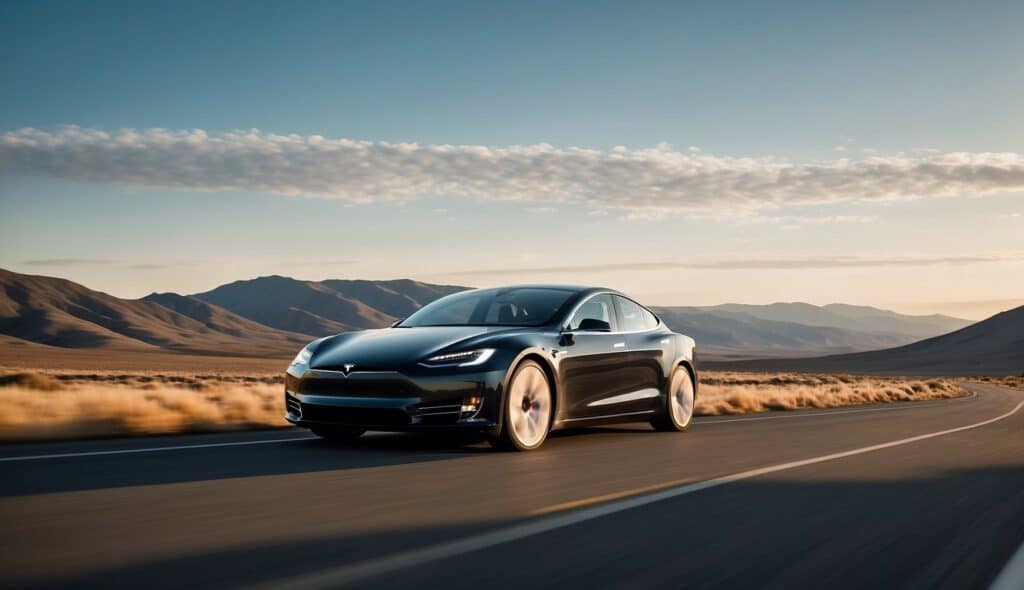
The Basics of EV Range
EV range refers to the distance an electric car can travel on a full battery charge. This is measured in miles and varies by model and battery capacity.
Factors such as the type of electric motor, the size of the battery, and the car’s weight all influence this range.
Smaller batteries typically offer less range, while larger batteries provide more distance.
For example, a Tesla Model S with a large battery can cover more than 396 miles on a single charge, setting it apart from other models.
Factors Affecting Tesla Range
Several factors influence Tesla’s battery range.
First, driving speed significantly affects efficiency. Higher speeds consume more electricity, reducing the miles you can travel.
Temperature also impacts battery performance, with extreme cold or heat diminishing range.
Heavier loads and frequent use of air conditioning further decrease efficiency.
Tesla vehicles come with features like the Energy app to monitor and optimize electricity use, helping drivers manage range anxiety.
By understanding these factors, Tesla owners can better predict their EV’s real-world performance.
Check out How to Charge a Rental Tesla
Tesla’s Battery Technology
Tesla’s battery technology is a key factor in determining the range and performance of their vehicles. It has evolved considerably over the years, enhancing durability and capacity while addressing issues like battery degradation.
Evolution of Battery Packs
Tesla has continuously improved its battery packs to boost vehicle range and efficiency. The original Roadster in 2008 featured a 53 kWh battery pack.
Over time, Tesla introduced new models with larger and more efficient battery packs.
The Model S, for instance, initially had a range of 265 miles on a single charge. With advancements, models now boast up to 405 miles.
These improvements are a result of better cell chemistry, cooling systems, and increased energy density.
The “Plaid” version of the Model S is an example of Tesla’s cutting-edge technology, pushing boundaries with its 4680 cell design and structural battery pack.
Battery Degradation and Lifespan
Battery degradation is a concern for EV owners, but Tesla’s batteries are designed to minimize this. Most Tesla batteries retain 90% of their capacity even after 200,000 miles.
Several factors influence battery degradation, including state of charge (SOC), usage patterns, and environmental conditions.
Keeping the SOC between 20% and 80% can help prolong battery life.
Tesla aims for longevity, designing batteries to last between 300,000 to 500,000 miles.
Innovative features like over-the-air software updates and sophisticated battery management systems contribute to maintaining battery health over time.
Check out How Much Electricity Does a Tesla Electric Car Use?
Tesla Models and Their Ranges
Tesla offers various models with differing ranges to meet different needs. Below, each model’s range capabilities are detailed, highlighting what makes each unique.
Tesla Model 3 Range Details
Tesla Model 3 is popular among electric vehicle buyers for its balance of performance and range.
The 2021 Model 3 Long Range version can go up to 353 miles on a full charge according to the EPA. The Performance version offers 315 miles of range but provides quicker acceleration.
| Tesla Model 3 Version | EPA Range (mi) |
|---|---|
| Long Range | 353 |
| Performance | 315 |
Tesla Model Y: A Crossover’s Range
The Tesla Model Y, a compact crossover, is designed for those needing more space without sacrificing range.
The Long Range version delivers 326 miles of driving per charge. The Performance model offers 303 miles but enhances driving excitement with its acceleration and handling.
| Tesla Model Y Version | EPA Range (mi) |
|---|---|
| Long Range | 326 |
| Performance | 303 |
Tesla Model S and Model X Performance
The Tesla Model S, known for luxury and innovation, provides the longest range in the lineup.
The Long Range variant can travel up to 405 miles while the Plaid version achieves 396 miles and much higher performance.
The Tesla Model X, a larger SUV, features a Long Range option offering 360 miles. The Model X Plaid, focused on performance, provides 340 miles of range.
| Tesla Model | Version | EPA Range (mi) |
|---|---|---|
| Model S | Long Range | 405 |
| Model S | Plaid | 396 |
| Model X | Long Range | 360 |
| Model X | Plaid | 340 |
Future Models: Roadster and Cybertruck
The Tesla Roadster is expected to redefine electric car performance with a projected range of 620 miles. It is described as the best electric vehicle for range and speed.
The Cybertruck, an anticipated addition to Tesla’s lineup, aims for a range of 500 miles on a single charge, though actual range may vary based on usage and conditions.
| Future Model | EPA Range (mi) |
|---|---|
| Roadster | 620 |
| Cybertruck | 500 |
Check out How Much Does It Cost to Build a Tesla Charging Station?
Charging Solutions and Infrastructure
Tesla offers a variety of charging solutions to keep their vehicles fully charged and ready to go. These solutions range from home-based setups to the expansive network of Supercharger stations, all designed to maximize the convenience and efficiency of charging Tesla vehicles.
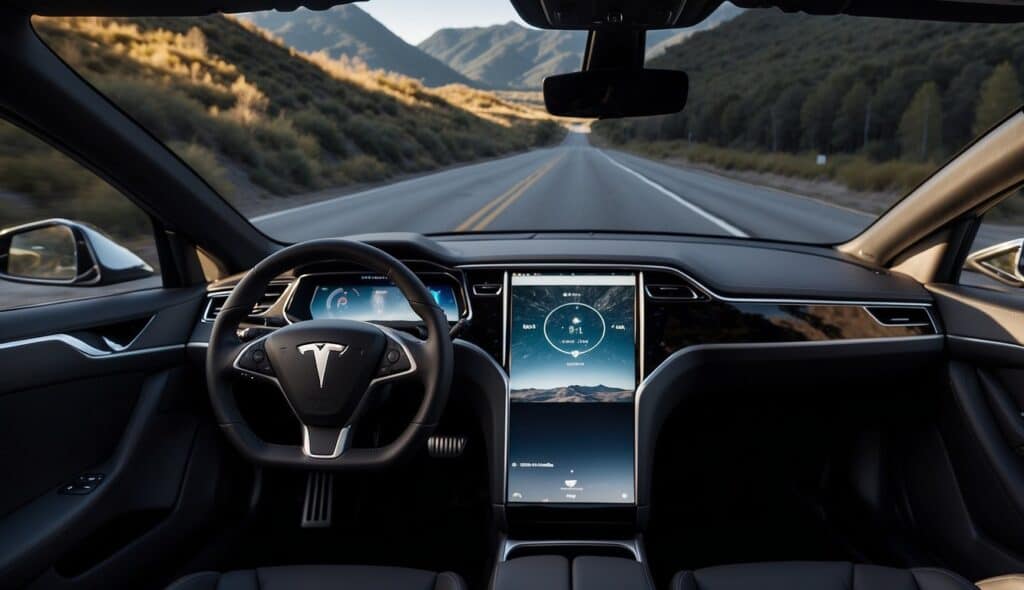
Additionally, Tesla’s regenerative braking system helps extend the car’s range by recovering energy during driving.
Home Charging Options
For many Tesla owners, charging at home is a convenient and cost-effective method. There are several types of chargers available.
A basic option is using the Mobile Connector with a standard 120-volt outlet, which can add 2-3 miles of range per hour. This suits those driving less than 30-40 miles daily.
For a faster charge, a Wall Connector can be installed at home, providing up to 44 miles of range per hour. This setup is ideal for overnight charging, ensuring the vehicle is fully charged each morning.
Both options require access to a reliable power source, typically in the owner’s garage or driveway.
Supercharger Stations and Their Impact on Range
Tesla’s Supercharger network is a crucial part of the company’s strategy to make long-distance travel feasible for electric vehicle owners.
These stations can add up to 200 miles of range in about 15 minutes, making cross-country trips more practical.
These stations are strategically located along popular travel routes and near amenities like restaurants and shopping centers.
This allows drivers to take short breaks while their car charges. The network minimizes range anxiety, as drivers can quickly locate and navigate to a nearby Supercharger using the car’s GPS system.
Regenerative Braking System
The regenerative braking system in Tesla vehicles captures energy that is typically lost during braking and converts it back into electricity to recharge the battery.
When the driver lifts off the accelerator, the system slows the car and recovers kinetic energy.
This process helps extend the driving range by adding a small amount of charge back to the battery during regular use.
While not a substitute for regular charging, regenerative braking contributes to the vehicle’s overall efficiency and can make a noticeable difference in city driving conditions.
Check out How Much Does It Cost for a Tesla Charging Station at Home?
Performance and Efficiency
Tesla vehicles offer impressive performance stats and efficiency features designed to maximize driving range while delivering remarkable acceleration and speed.
Maximizing Tesla’s Driving Range
To get the best range out of a Tesla, there are several factors to consider.
Driving habits play a big role; smooth and steady acceleration helps conserve battery life.
Using the Energy app on the touchscreen can help drivers monitor energy use in real-time. This app shows how much energy is used by different vehicle components.
Tesla models come with different wheel options.
For example, the 2022 Tesla Model 3 Long Range with 18″ wheels can travel up to 358 miles on a full charge. Switching to 19″ wheels slightly decreases the range.
Environmental conditions also impact efficiency. Extreme temperatures can reduce battery performance.
Keeping the aerodynamics optimized and minimizing cargo weight also helps.
Acceleration, Speed and Range
Tesla cars are known for their acceleration and speed. The Model S Plaid can accelerate from 0-60 mph in just 2.3 seconds.
This rapid acceleration is powered by a dual-motor setup in some models, and even a tri-motor setup in the Model S Plaid.
However, high acceleration and sustained high speeds can reduce the vehicle’s range. Even with impressive performance, there is a trade-off between speed and efficiency.
Torque and horsepower are crucial. Vehicles like the Model S Plaid provide incredible thrust due to high torque levels.
All-wheel drive systems increase traction and performance but can also slightly affect range compared to rear-wheel drive systems.
Each Tesla’s range will vary based on its specific configuration, driving conditions, and individual driving style.
Check out Can Any Electric Vehicle Use a Tesla Charging Station?
Road Experience and Driver Assistance Features
Tesla vehicles offer impressive road experience and advanced driver assistance features aimed at enhancing both safety and convenience.
These features encompass Autopilot functionality, precise navigation, and energy prediction capabilities.
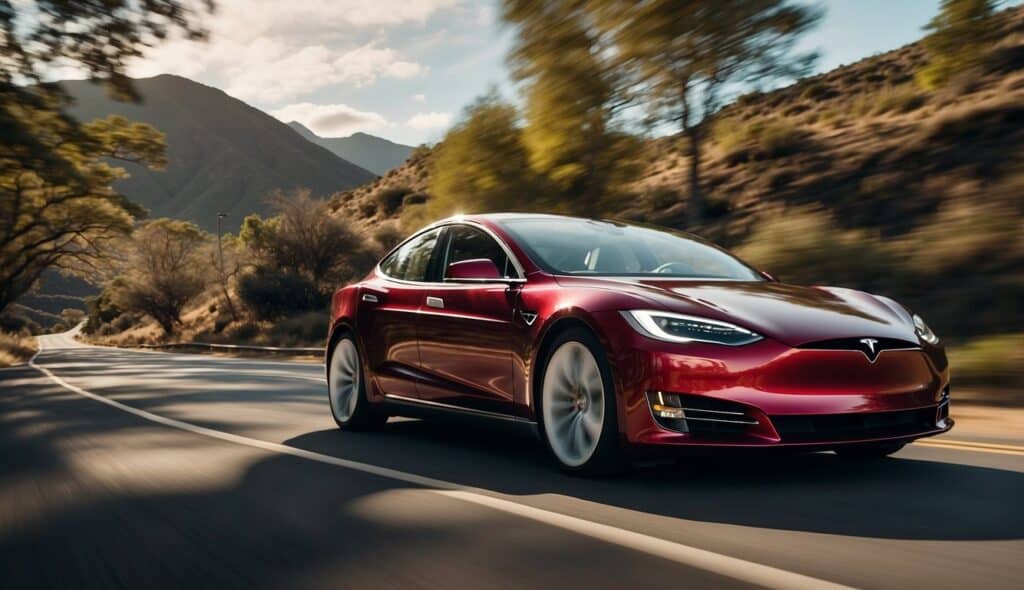
Autopilot and Safety
Tesla’s Autopilot is a suite of driver assistance features designed to make driving safer and less stressful.
Standard in new Tesla models, or available for purchase post-delivery, Autopilot includes capabilities like traffic-aware cruise control and autosteer.
For example, the Tesla Model 3 can recognize stop signs, stop lights, and various traffic signs, providing significant support to drivers.
Additionally, Full Self-Driving (FSD) Beta enables Tesla cars to drive on city streets, though it still requires driver supervision for safety.
The system is continuously improved through over-the-air software updates, which allow for new features and safety enhancements.
Features like automatic lane changes and collision warnings are part of Tesla’s dedication to ensuring a secure driving environment.
Navigation and Energy Prediction
Tesla’s navigation system delivers real-time data to assist with trip planning, incorporating features such as traffic conditions and supercharger locations.
The system’s energy prediction capabilities estimate the vehicle’s range and advise battery charging stops accordingly.
In the Tesla Model 3, the navigation not only maps out the route but also factors in the terrain, weather conditions, and driving habits to predict energy consumption more accurately.
This helps drivers manage their range more effectively and reduces the likelihood of running out of battery power unexpectedly.
Moreover, the navigation system is designed to adapt and optimize routes, providing turn-by-turn directions through video display and voice guidance, ensuring a seamless driving experience.
This smart integration of navigation and energy management adds to the overall efficiency of Tesla vehicles on the road.
Check out How to Save Battery on Electric Car While Driving?
Cost of Ownership and Maintenance
Tesla vehicles offer certain financial advantages over traditional gas-powered vehicles, especially in terms of service and upkeep. Let’s break down these aspects to understand their implications more clearly.
Comparing Maintenance: Tesla vs. Gas-Powered Vehicles
Tesla vehicles generally have fewer moving parts compared to gas-powered vehicles. This reduces the likelihood of mechanical issues.
Electric vehicles do not require oil changes, which is a regular expense for gas-powered cars.
According to Car Talk, the cost to maintain a Tesla Model Y over 100,000 miles ranges between $8,250 and $15,000. In contrast, maintaining a Toyota Highlander over the same mileage can cost $14,029.
Additionally, Teslas need tire rotations every 6,250 miles or when tread depth differences reach 2/32 inches .
Long-Term Savings and Resale Value
In the long run, Tesla vehicles can save owners money. They qualify for federal tax credits that reduce the initial purchase cost.
Resale value is another important factor. Owning a Tesla can be financially beneficial due to its high resale value.
The True Cost to Own of a 2022 Tesla Model 3 totals $42,538, with depreciation at $18,049.
Transferring the unused portion of a Tesla Maintenance Plan to a new owner adds value when selling the vehicle.
This feature supports long-term cost savings by stretching the value over extended use.
Considering a Tesla Purchase
Choosing a Tesla involves many factors such as personal driving needs, potential cost savings, and current incentives for electric vehicle buyers. A closer look can help decide if a Tesla is the right fit.
Is a Tesla Right for You?
A Tesla might be ideal for those seeking an eco-friendly and high-performance car. First-time buyers often appreciate the zero-emission benefits.
Models like the Model S Plaid offer impressive acceleration and long ranges.
For those preferring a crossover, the Model X provides ample space. Tesla’s vehicles, including the Model 3 and Model Y, feature advanced autopilot systems and over-the-air updates.
Evaluating your daily commute and charging accessibility is crucial. Urban drivers with short commutes benefit from the low running costs, while long-distance travelers enjoy the extensive Supercharger network.
Incentives for Electric Vehicle Buyers
Government incentives can significantly reduce costs for electric vehicle buyers.
Federal tax credits offer up to $7,500 for buying a new battery electric vehicle (BEV). Some states provide additional rebates, further lowering the overall expense.
Local programs may also offer perks such as HOV lane access and reduced registration fees. Utility companies might provide rebates for installing home charging stations, making overall ownership cost lower.
Investing in a Tesla can be more economical over time due to lower fuel and maintenance expenses.
Consistently lower energy costs compared to gasoline, combined with fewer moving parts, lead to significant savings.
Potential buyers can make an informed decision by considering these incentives and benefits.
Conclusion
Tesla cars have proven to be durable and long-lasting. The 2012 Tesla Model S can comfortably last more than 10 years.
The Tesla Model 3 has an impressive range of 350,000 miles when properly maintained.
The Tesla Model S can reach up to 400,000 miles for those interested in longevity.
Battery replacement is a key factor. The average battery lasts between 300,000 to 400,000 miles, and replacement costs range from $3,000 to $7,000.
Maintenance and careful use can significantly extend a Tesla’s lifespan. Following proper charging practices and general upkeep ensures maximum mileage.
You may also like:
- Why is My Tesla Not Charging?
- Tesla Charger Green Light but Not Charging
- Tesla Wall Charger Green and Blue Light Issues
- Tesla Says Ready To Charge But Not Charging
Hi, I’m Marybeth, an electric car enthusiast living in New York in the USA. As the owner of electriccartalks.com, I love sharing my knowledge on EV tips, battery maintenance, and charging solutions. As a proud Tesla owner, I blend my personal experiences with professional insights to offer valuable information to fellow EV enthusiasts. Through my articles, I aim to empower others to make informed decisions about their electric vehicles. Read more