
Choosing between gas cars and electric cars can be challenging, but understanding their pros and cons helps make the decision easier.
Gas cars are known for their longer range and ease of refueling, making them convenient for long road trips. They often have a lower initial purchase price than electric cars.
Electric cars, on the other hand, excel in environmental benefits and lower running costs. They produce zero emissions and often cost less to charge than filling a gas tank. Due to fewer moving parts, these vehicles also tend to have fewer maintenance needs.
Gas cars offer convenience and familiarity, while electric cars bring cost efficiency and eco-friendliness.
It’s important to consider what aspects are most crucial for your needs and lifestyle before making a decision.
Comparison of Gas Cars and Electric Cars
Gas cars and electric cars have distinct features that impact their performance, design, and environmental effects. Understanding these differences can help you make an informed decision.
Fundamentals of Gasoline and Electric Vehicles
Gas cars use an internal combustion engine (ICE) that burns gasoline to produce power. The ICE combines air and fuel, igniting it with a spark plug, creating explosions that push the pistons and create motion. They require regular refueling at gas stations.
Electric cars, on the other hand, use an electric motor powered by rechargeable batteries. These vehicles are plugged in to charge their batteries, which then supply power to the motor. Unlike ICEs, electric motors have fewer moving parts, leading to less mechanical wear and tear.
Differences in Vehicle Design
Gasoline and electric vehicles have notable design differences.
Gas cars have a larger engine compartment due to the ICE. They also include components like a fuel tank, exhaust system, and radiator.
Electric cars feature a simpler design. The electric motor is generally placed low in the chassis to improve stability. The batteries are usually spread out across the vehicle’s floor to lower the center of gravity. This layout allows for additional storage space and can enhance handling.
Impact on the Environment
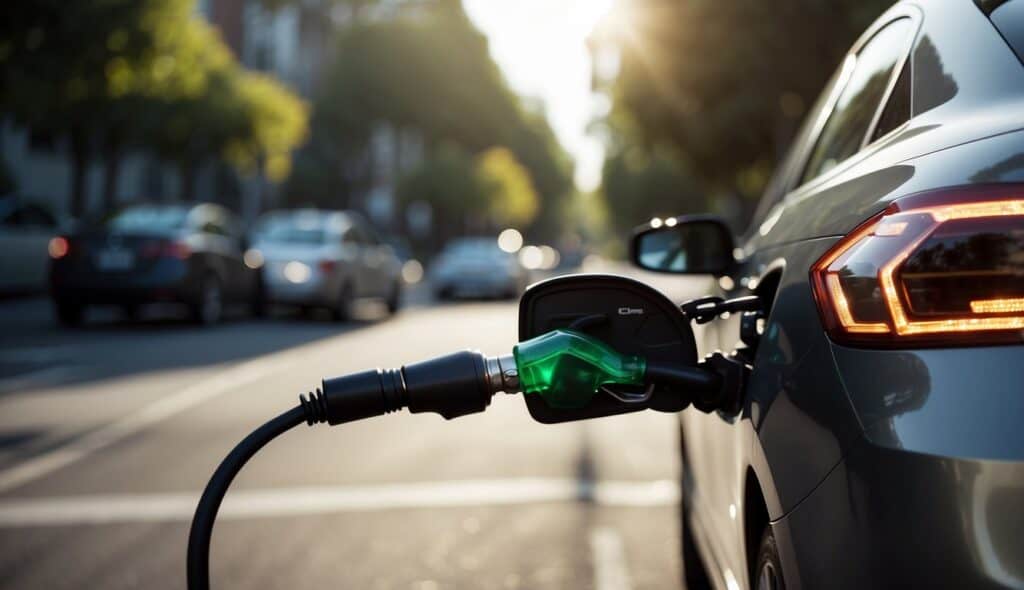
Gas cars emit pollutants like carbon dioxide and nitrogen oxides, contributing to air pollution and climate change. Their dependence on fossil fuels means they continue to release greenhouse gases throughout their operational life.
Electric cars produce zero tailpipe emissions. However, the environmental benefit depends on how the electricity used to charge them is generated.
Renewable energy sources greatly enhance the eco-friendliness of electric cars. Additionally, battery production does have an environmental impact, though ongoing advancements aim to mitigate these effects.
Cost Analysis
When comparing gas cars and electric cars, it’s essential to look at various cost factors. These include the initial purchase price, long-term ownership costs, and government incentives and tax credits. Understanding these can help potential buyers make informed decisions.
Initial Purchase Price
The initial purchase price of electric cars tends to be higher than that of gas cars. This is mainly because of the cost of battery packs used in electric vehicles.
For instance, cars like the Tesla Model 3 or the Ford Mustang Mach-E can be more expensive than comparable gas-powered models. The gap between EV prices and gas car prices is closing, but the price difference is still significant for many buyers.
Gas cars, on the other hand, often have a lower upfront cost, making them more accessible to a broader range of consumers.
Long-Term Ownership Costs
Electric cars typically have lower long-term ownership costs than gas cars due to cheaper costs for fuel and maintenance.
Electricity is generally less expensive than gasoline, leading to reduced fuel costs over time. Maintenance costs are also lower for EVs since they have fewer moving parts, reducing the need for regular servicing.
A detailed cost of ownership analysis shows that EV owners save money on insurance, financing, and other operating costs.
Gas cars, while cheaper initially, often incur higher costs over time due to expensive fuel and more frequent maintenance needs.
Government Incentives and Tax Credits
Government incentives and tax credits can significantly impact the total cost of owning an electric car.
Many governments offer tax credits, rebates, and other incentives to encourage the purchase of EVs. These incentives can reduce the initial purchase price and make EVs more financially attractive.
For example, federal tax credits in the United States can provide significant savings. Additionally, some states offer extra incentives that further reduce the cost.
For gas cars, these incentives are generally not available, which means buyers miss out on these potential savings.
Read Why Do Electric Cars Not Have Gears?
Performance and Maintenance
Gas and electric cars differ significantly in their performance and maintenance requirements. These differences impact not only how they drive but also how much they cost to maintain.
Driving Experience and Acceleration
Electric cars are known for their instant torque, which provides rapid acceleration. The electric motor delivers power directly to the wheels without delay.
Gasoline vehicles, while capable of high speeds, often have a slight lag in acceleration as the engine revs up. This can make electric cars feel quicker off the line compared to gas cars.
Electric cars also tend to have a quieter ride. Without the noise of an internal combustion engine, they offer a more serene driving experience.
Gas cars usually produce engine noise and vibrations, which some drivers may prefer for a more “muscular” feel.
Another aspect is braking performance.
Electric vehicles often use regenerative braking, which recaptures energy and feeds it back into the battery. This can make for smoother and more efficient braking.
Maintenance Requirements
Electric cars generally have the upper hand when it comes to maintenance. The reason is that they have fewer moving parts.
Electric motors are simpler and require less upkeep than gas engines. There is no need for oil changes or maintenance of exhaust systems.
This reduced need for regular service can lead to lower long-term maintenance costs.
Gas cars, with their complex engines, require more frequent servicing.
For example, oil changes, tune-ups, and other services are necessary to keep them running smoothly. Over time, these costs can add up.
While electric vehicles have lower routine maintenance costs, their battery packs can be expensive to replace. However, this issue is becoming less significant with the decreasing cost of batteries.
Driving and Refueling Experience
Driving and refueling experiences in gas and electric cars differ significantly. These differences affect convenience, everyday usage, and potential range anxiety.
Charging and Refueling Infrastructure
Gasoline vehicles benefit from a well-established refueling infrastructure.
Gas stations are widespread, allowing drivers to refuel quickly and resume their journey.
In contrast, electric vehicles (EVs) rely on public charging stations for recharge. Although the number of charging stations is growing, there are still fewer of these compared to gas stations.
Charging at home provides additional convenience for EV owners. It eliminates the need for trips to public stations but typically takes longer unless using a Level 2 charger.
Public fast chargers can significantly reduce charge times but are not as commonly available as gas stations.
Daily Usage and Convenience
For daily usage, electric cars are convenient because they can be charged at home, which means drivers can start their day with a full battery. This is particularly handy for daily commutes within range capabilities.
Gas cars, on the other hand, offer quicker refueling times.
Refueling a gas tank only takes a few minutes compared to the several hours it might take to fully charge an EV at home. Therefore, gas-powered vehicles are often seen as more convenient for longer trips.
Additionally, gas cars tend to require more frequent visits to the mechanic, while EVs require less regular maintenance, have fewer moving parts, and do not require oil changes.
Range Considerations and Anxiety
Range considerations are crucial for many drivers.
Gas cars usually have an average range of 250-300 miles per tank, permitting extended trips without frequent stops.
Electric cars, while often cheaper to operate, may cause range anxiety due to their limited range per charge and longer recharge times.
Some EV models offer 200-300 miles on a full charge, but the availability of charging stations can vary, adding to potential stress for long journeys.
Range anxiety is a significant concern for new EV users, though it is mitigated by planning trips and knowing where charging stations are located. For frequent long-distance travelers, gas cars might still present a more reassuring option.
Environmental Impact
Electric vehicles (EVs) and gas-powered cars have different effects on the environment, especially in terms of emissions and energy efficiency. Each type has its own advantages and challenges that impact sustainability.
Emissions and Pollution
Electric vehicles produce no tailpipe emissions, meaning they do not release pollutants while driving. This can significantly reduce urban air pollution, benefiting public health.
Gas-powered cars, on the other hand, emit greenhouse gases and pollutants such as carbon dioxide (CO2) and nitrogen oxides. These contribute to climate change and can cause respiratory issues in humans.
However, manufacturing EVs, especially their large batteries, results in higher initial carbon emissions compared to gas cars. Despite this, EVs generally produce fewer greenhouse gases over their lifetime, particularly as the electricity grid becomes cleaner.
Energy Source and Efficiency
The efficiency of electric motors is higher than that of internal combustion engines.
EVs convert a greater percentage of the energy from the grid into motion compared to gas cars, which lose a lot of energy as heat.
The impact of an EV also depends on how the electricity is generated.
In regions where the grid relies largely on fossil fuels, the environmental benefit of EVs is reduced.
Conversely, EVs have a much smaller carbon footprint in areas with a higher share of renewable energy.
Market and Future Trends
Electric vehicles (EVs) and gas cars are evolving rapidly, significantly impacting adoption rates, technological advancements, and future market developments.

Adoption and Sales Trends
The market for electric vehicles, including battery-electric vehicles (BEVs) and plug-in hybrids, has grown significantly over the past decade.
In 2023, global EV sales surged, with more automakers committing to greener technologies.
Consumers are also becoming more eco-conscious, leading to a steady increase in EV adoption.
Despite the higher upfront costs compared to gas cars, dropping prices and government incentives are encouraging more buyers to consider EVs.
For instance, the average price of a new EV has been decreasing, making them more accessible.
The expanding network of charging stations is another factor supporting the growth of EVs.
Increased infrastructure leads to reduced range anxiety, which has traditionally been a barrier for potential EV buyers.
Regulatory changes promoting lower emissions are also driving this trend.
Technological Advancements
Technological advancements play a crucial role in the evolution of both electric and gas cars.
Improvements in battery technology are pivotal for EVs. Modern batteries offer longer ranges and faster charging times, making EVs more practical for everyday use.
Automakers are investing heavily in hybrid electric vehicles (HEVs) and plug-in hybrid models.
These hybrids combine the benefits of electric driving with the range and convenience of traditional gas vehicles.
Smart technology such as vehicle-to-grid (V2G) capabilities allows EVs to store and return energy to the grid, providing added benefits to owners.
Advancements in gas cars are focused on making engines more efficient and reducing emissions, although these don’t match the zero-emission benefits of EVs.
Prospective Developments
Looking ahead, the market is likely to see even greater shifts towards electric vehicles.
Automakers like General Motors and Ford have announced ambitious plans to electrify their fleets, phasing out traditional gas engines over the next couple of decades.
Emerging technologies like solid-state batteries promise to revolutionize the EV market by offering higher energy densities and improved safety compared to current lithium-ion batteries.
This could further decrease the cost of EVs and extend their range.
Regulations worldwide, such as bans on new petrol and diesel car sales in several countries by 2030, will accelerate the transition to EVs.
Additionally, continuous improvements in renewable energy sources will make electricity for charging cleaner, enhancing the overall environmental benefits of EVs.
Conclusion
Here is the comparison of Gas cars vs Electric cars.
| Aspect | Gas Cars | Electric Cars |
|---|---|---|
| Refueling/Charging Time | Gas cars refuel quickly at gas stations. | Electric cars can take longer to charge, even at fast-charging stations. |
| Purchase Cost | Typically cheaper to buy initially. | Higher purchase price, but prices are decreasing. |
| Running Costs | Regular maintenance required (oil changes, coolant). | Lower maintenance costs, no oil changes needed. |
| Environmental Impact | Higher emissions contribute to pollution and climate change. | Lower emissions, more environmentally friendly. |
| Range | Generally offers longer range per refuel. | Improving range, but still less than most gas cars. |
| Charging Infrastructure | Established global network of gas stations. | Growing network, but not as widespread as gas stations yet. |
Refueling a gas car is usually faster than charging an electric car. Gas cars also tend to have lower initial purchase costs.
Electric cars, while more expensive upfront, have been decreasing in price.
Regular maintenance, like oil changes, is common with gas cars. Electric cars have fewer regular maintenance needs.
Environmentally, electric cars have lower emissions compared to gas cars, which is better for the planet.
While gas cars generally offer a longer range on a full tank, electric car ranges are improving. The charging infrastructure for electric cars is growing but not as extensive as gas stations for now.

Hi, I’m Marybeth, an electric car enthusiast living in New York in the USA. As the owner of electriccartalks.com, I love sharing my knowledge on EV tips, battery maintenance, and charging solutions. As a proud Tesla owner, I blend my personal experiences with professional insights to offer valuable information to fellow EV enthusiasts. Through my articles, I aim to empower others to make informed decisions about their electric vehicles. Read more