
Electric vehicles have revolutionized transportation, but many people wonder if they share components with gas-powered cars. A common question is whether electric cars have alternators like traditional vehicles do.
Electric cars do not have alternators. Unlike gas-powered cars that use alternators to charge the battery and power electrical systems, electric vehicles have a different setup. They rely on a large battery pack as their main power source and use a DC-to-DC converter to supply power to the 12-volt battery for auxiliary systems.
This design difference stems from the fact that electric cars don’t have internal combustion engines. Without an engine to spin an alternator, EVs use more efficient methods to manage and distribute electrical power throughout the vehicle. The absence of an alternator is just one way electric cars simplify their design compared to traditional vehicles.
Fundamentals of Electric Vehicles
Electric vehicles (EVs) differ greatly from traditional cars in their power systems and energy use. They rely on electrical energy stored in batteries rather than burning fuel in an engine.
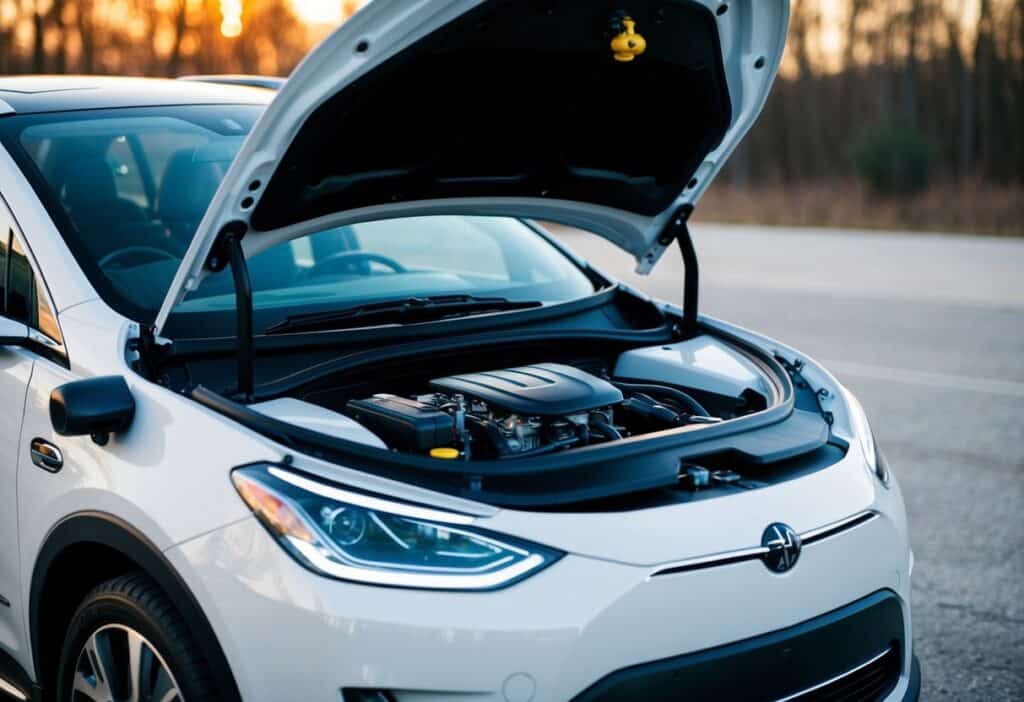
Comparative Overview of EVs and Combustion Engine Cars
EVs use electric motors to turn wheels, while gas cars have internal combustion engines. Gas cars burn fuel to create mechanical energy. EVs get power from rechargeable batteries.
EVs have fewer moving parts than gas cars. This can mean less maintenance. They also produce zero direct emissions while driving.
Gas cars need oil changes and have more complex systems. But they can refuel quickly at gas stations. EVs take longer to recharge but can often be charged at home.
EVs are quieter and often accelerate faster from a stop. Gas cars typically have a longer driving range before needing to refuel.
Basic Mechanical to Electrical Energy Conversion in EVs
EVs turn electrical energy into motion through electric motors. The process starts with the battery, which stores electric charge.
When the driver presses the accelerator, the car’s computer sends power from the battery to the motor. The motor uses electromagnets to create rotation, which turns the wheels.
During braking, EVs can recapture energy. The motor acts as a generator, turning the car’s motion back into electricity. This charges the battery, increasing efficiency.
This system is simpler than a gas engine’s many steps of burning fuel, creating pressure, and turning pistons. It allows EVs to use energy more efficiently for movement.
Role of Alternators in Traditional Cars
Alternators are crucial components in traditional combustion engine vehicles. They generate electricity to power electrical systems and charge the battery while the engine runs.
Function of Traditional Alternators
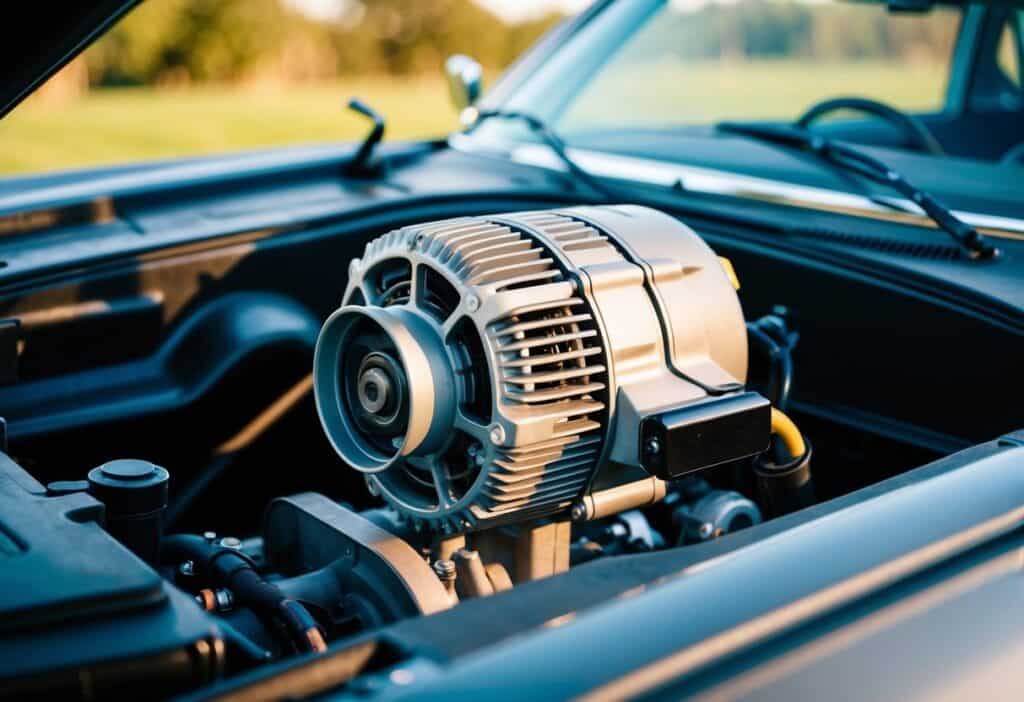
Alternators convert mechanical energy from the engine into electrical energy. They work through electromagnetic induction. As the engine spins the alternator pulley, a rotor inside creates a magnetic field. This field induces an electric current in surrounding wire coils.
The alternator produces alternating current (AC). A rectifier then changes this AC to direct current (DC) for use in the car’s electrical systems. Alternators can generate more power than the car needs at any given time. This excess charges the battery and ensures a steady power supply.
Alternators typically produce 13.5 to 14.5 volts. This higher voltage allows for efficient battery charging. A voltage regulator keeps the output stable, protecting sensitive electronics from damage.
Comparison to Electric Vehicle Energy Systems
Electric vehicles (EVs) don’t use alternators. They rely on large battery packs as their main power source. EVs use a DC-to-DC converter instead of an alternator. This device steps down the high voltage from the main battery to power 12-volt systems.
EVs also use regenerative braking to recover energy. When braking, the electric motor acts as a generator. It converts kinetic energy back into electricity, which recharges the battery.
Unlike traditional cars, EVs don’t have an internal combustion engine to spin an alternator. Their electrical systems are designed to work efficiently with the main battery pack. This setup eliminates the need for a separate charging system like an alternator.
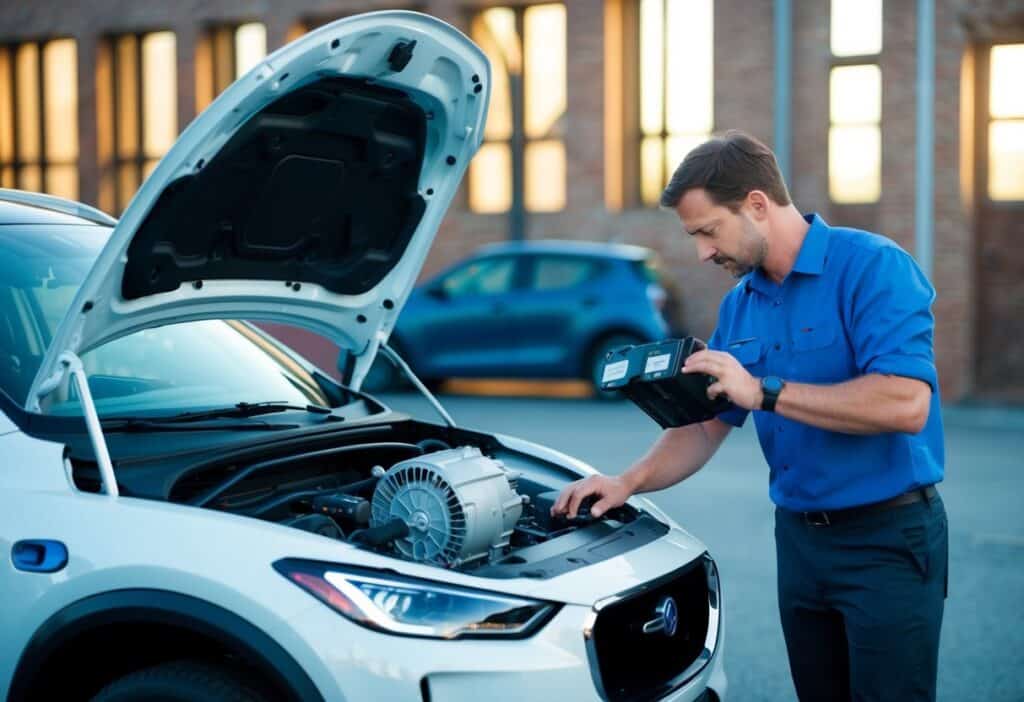
Check out Does an Electric Car Have a Transmission?
Electric Vehicle Power Systems
Electric vehicles use advanced power systems to efficiently store, distribute, and manage energy. These systems include high-capacity batteries, energy recovery methods, and smart electronic components.
EV Batteries and Charging Technology
EV batteries are the heart of electric vehicles. Most use lithium-ion battery packs that store large amounts of energy. These battery packs can power a car for hundreds of miles on a single charge.
Charging stations allow EVs to recharge their batteries. There are different types of charging stations:
- Level 1 (slow): Uses a standard 120V outlet
- Level 2 (medium): Uses a 240V outlet, common for home charging
- DC Fast Charging: Provides rapid charging for long trips
Onboard chargers in EVs convert AC power from charging stations to DC power for the battery. This allows EVs to charge from various power sources.
Regenerative Braking and Energy Recovery
Regenerative braking is a key feature of electric vehicles. It recovers energy that would be lost as heat in regular cars.
When an EV slows down, the electric motor acts as a generator. It converts the car’s motion back into electricity. This electricity then charges the battery.
Regenerative braking can boost an EV’s range by 10-25%. It works best in stop-and-go traffic. The system also reduces wear on brake pads.
Power Management and Electronic Converters
EVs use complex power management systems. These systems control the flow of electricity between components.
A main part is the DC to DC converter. It changes the high voltage from the main battery to lower voltage for the 12V battery. The 12V battery powers lights, wipers, and other accessories.
Power inverters are also crucial. They change DC from the battery to AC for the motor. This allows precise control of the motor’s speed and power.
These electronic systems improve energy efficiency. They help EVs use power smartly and extend driving range.
Check out Can Electric Cars Be Repaired After an Accident?
Maintenance and Efficiency
Electric vehicles (EVs) offer unique maintenance and efficiency advantages over traditional cars. Their simpler design and advanced energy systems lead to lower upkeep costs and better performance.
Comparing EV and ICE Vehicle Maintenance
EVs have fewer moving parts than internal combustion engine (ICE) vehicles. This means less wear and tear and fewer repairs. EV owners don’t need oil changes or spark plug replacements. There’s no need for fuel filters or timing belts either.
EVs still need some upkeep. Tire rotations, brake inspections, and coolant checks are important. But these tasks are often less frequent and simpler than ICE car maintenance.
The electric motor in EVs is very durable. It can last for many years with minimal care. This leads to lower long-term maintenance costs for EV owners.
Advantages in Energy Efficiency and Performance
EVs are much more energy efficient than ICE cars. They convert about 77% of electrical energy into movement. ICE vehicles only turn about 12-30% of fuel energy into motion.
This efficiency shows in EV performance. Electric motors provide instant torque, giving quick acceleration. EVs also have better weight distribution, which can improve handling.
EVs use regenerative braking to recapture energy. This system turns kinetic energy back into electricity when slowing down. It helps extend driving range and reduces brake wear.
The high efficiency of EVs means lower energy costs for drivers. They can travel further on less energy compared to gas-powered cars.
Financial and Environmental Considerations
Electric vehicles offer both financial and environmental benefits compared to gas-powered cars. These advantages stem from their unique technology and energy sources.
Cost Analysis of EVs versus Gas-Powered Cars
Electric vehicles often have higher upfront costs than gas cars. However, they can save money over time. EVs have lower fuel costs since electricity is cheaper than gas. They also need less maintenance. There’s no oil changes or spark plug replacements.
The average EV costs about $0.04 per mile to run. A gas car costs around $0.10 per mile. This can add up to big savings over years of driving.
Battery prices are dropping. This makes EVs more affordable. Some governments offer tax credits for EV buyers. These can help offset the higher purchase price.
Environmental Impact and Sustainability Benefits
EVs produce zero tailpipe emissions. This helps improve air quality in cities. They have a smaller carbon footprint, even when accounting for battery production.
The environmental impact of EVs depends on the electricity source. Using renewable energy like solar or wind makes EVs even cleaner. Many countries are increasing their use of renewable energy.
EVs help reduce dependence on fossil fuels. This supports energy independence and sustainability. Advanced battery technology is making EVs more efficient. It’s also improving their range and performance.
Recycling EV batteries is becoming more common. This further reduces their environmental impact. As the grid gets cleaner, EVs become even more eco-friendly.
Technological Developments and Future of EVs
Electric vehicles are advancing rapidly. New battery tech and charging systems are making EVs more practical and appealing to consumers.
Battery Technology and Energy Storage Advances
Lithium-ion batteries remain the top choice for EVs. But new chemistries are emerging. Solid-state batteries promise higher energy density and faster charging. Some companies aim to release solid-state EVs by 2025.
Researchers are also working on lithium-sulfur and lithium-air batteries. These could store more energy at a lower cost. Tesla and other automakers are improving their battery management systems. This helps extend range and battery life.
Recycling old EV batteries is becoming more common. This reduces waste and cuts production costs. Some car makers are exploring battery swapping to speed up “refueling” times.
Check out Sodium Ion Battery for Electric Vehicles
EV Charging Infrastructure and Global Trends
Fast charging networks are growing worldwide. Many countries plan to ban gas car sales by 2030-2040. This is speeding up charging station rollouts.
Level 2 chargers are common for home and workplace use. They typically add 20-60 miles of range per hour. DC fast chargers can add 60-200 miles in just 20 minutes.
Wireless charging pads are being tested on public roads. These could charge EVs as they drive. Some cities are adding charging to streetlights and parking meters.
Smart grids are helping manage increased power demand from EVs. Vehicle-to-grid systems may let EVs store and return energy to the grid.
Frequently Asked Questions
Electric vehicles differ from traditional cars in several key ways. Their unique power systems raise common questions about charging, components, and energy efficiency.
Why don’t electric vehicles include alternators for charging?
Electric cars don’t need alternators. They use a different system to power their electrical components. The main battery pack provides all the energy needed.
How do electric vehicles charge their 12V batteries?
Electric cars use a DC-to-DC converter. This device takes power from the main battery pack and converts it to charge the 12V battery. It’s more efficient than an alternator.
Do hybrid vehicles utilize alternators?
Yes, hybrid cars typically have alternators. They still use a gas engine part of the time. The alternator charges the 12V battery when the gas engine runs.
Are there any cars that can charge themselves while driving?
Some electric cars use regenerative braking to recapture energy. This helps extend their range, but doesn’t fully recharge the battery. No car can fully charge itself while driving.
Why don’t electric cars come equipped with generators?
Adding a generator would make electric cars heavier and less efficient. It would also increase complexity and cost. The large battery pack provides enough power for most driving needs.
What mechanism do electric vehicles use instead of transmissions?
Most electric cars use a single-speed gearbox. Electric motors provide full torque at all speeds. This eliminates the need for multiple gears found in gas-powered cars.
Conclusion
Electric cars do not have alternators. This is a key difference from traditional gas-powered vehicles.
Instead of alternators, electric vehicles use other systems to manage power. Their electric motors can act as generators when slowing down or braking. This process is called regenerative braking.
EVs also have special battery management systems. These monitor and control the car’s large battery pack.
The main way electric cars recharge is by plugging into a charging station. This replaces the need for an alternator to constantly charge a smaller battery.
Electric cars have a simpler design without alternators. This helps reduce maintenance needs and improves efficiency.
Understanding these differences is important as more people switch to electric vehicles. The lack of an alternator is just one way EVs differ from conventional cars.
You may also like:
- Are Electric Cars More Dangerous in a Crash?
- Do Electric Cars Explode in a Crash?
- Are Electric Vehicles Tires More Expensive?
- Do Electric Cars Need Special Tires?

Hi, I’m Marybeth, an electric car enthusiast living in New York in the USA. As the owner of electriccartalks.com, I love sharing my knowledge on EV tips, battery maintenance, and charging solutions. As a proud Tesla owner, I blend my personal experiences with professional insights to offer valuable information to fellow EV enthusiasts. Through my articles, I aim to empower others to make informed decisions about their electric vehicles. Read more