
Switching to an electric car is a smart choice for many, but it can seem challenging if you don’t have a driveway for easy charging.
Fortunately, there are practical solutions available.
One convenient option is to charge at work, where many offices are now installing EV charge points in their car parks.
This can be a hassle-free method, especially if your employer offers this service.
Another method is to utilize public charging stations. Cities and towns are increasingly equipped with these stations, meaning you can charge while running errands or shopping.
These are part of initiatives like the UK’s On-Street Residential Chargepoint Scheme, which supports the installation of on-street chargers.
Portable chargers offer another valuable option.
Devices like the Webasto Go can be plugged into a regular wall outlet and provide a slow but steady charge.
This can be quite handy for those without immediate access to fixed charging points.
Exploring these options ensures that owning an electric car without a driveway doesn’t have to be an obstacle.
Understanding Electric Car Charging Basics
Electric vehicles (EVs) need to be charged regularly to keep running.
This process involves connecting the EV to a power source using a charging cable.
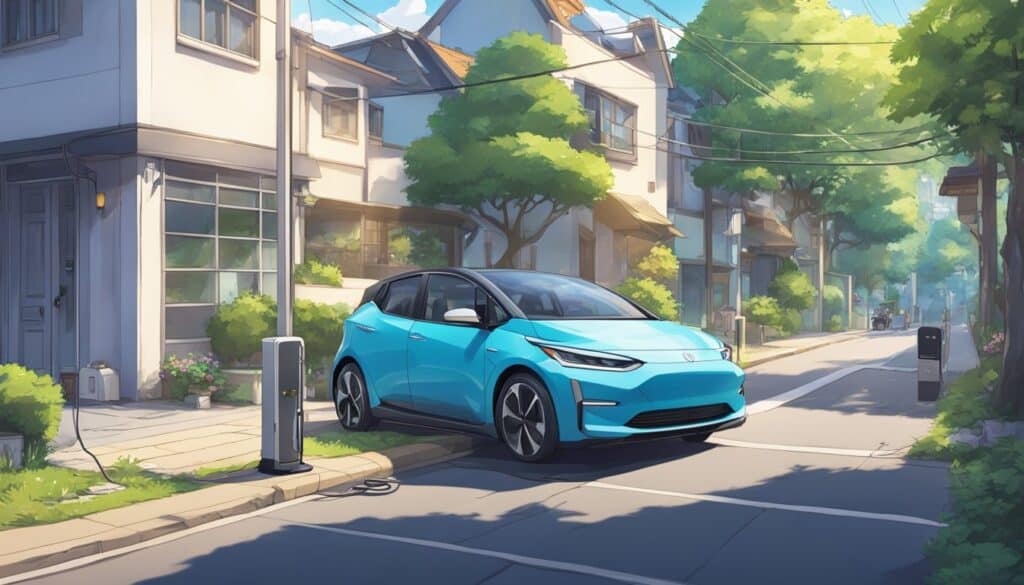
Types of Chargers
There are three main types of EV chargers:
- Level 1 Charger: Uses a standard home outlet. It’s slow but convenient for overnight charging.
- Level 2 Charger: Requires a special installation. Faster than Level 1 and often found at public charging stations.
- DC Fast Charger: The fastest option, usually found at highways or commercial areas.
Charging Speeds
Charging speed depends on the electricity supply and the charging infrastructure. Here’s a quick look at typical speeds:
| Charger Type | Miles Per Hour of Charging |
|---|---|
| Level 1 | 2-5 miles |
| Level 2 | 10-60 miles |
| DC Fast Charger | 60-100 miles |
Charging Stations
Public charging stations are becoming more common.
You can find them in parking lots, shopping centers, and along highways.
Some require memberships or payment, while others are free.
Portable Chargers
Another option is a portable charger.
These can plug into standard outlets, providing a slow but steady charge.
They are useful for those who lack dedicated parking spaces.
Check out Workplace Electric Vehicle Charging Policy USA
Assessing Your Charging Options Without a Driveway
Charging an electric car without a driveway can seem challenging, but several viable options exist.
- Public Charging Points: One of the most common solutions is to use public charging stations. These are often located in parking garages, shopping centers, and even on public streets. Public chargers are usually fast-charging, offering a quick boost for your electric vehicle.
- Kerbside Charging: Some local councils have started initiatives to install charging points on streets. This on-street residential chargepoint scheme can be very convenient for people living in flats or apartments.
- Charge at Work: If your workplace offers charging facilities, you can recharge your car while you work. Many companies are now setting up EV chargers in their parking lots, making this a practical option.
- Local Council Programs: Check if your local council has any programs to support charging for residents without driveways. They may offer grants or other incentives to help cover the costs of installing a charger near your home.
- Charging Hubs: Some areas are developing dedicated charging hubs with multiple charging points. These hubs can be especially useful for people who don’t have access to private charging facilities.
Here’s a quick comparison table for easy reference:
| Option | Advantages | Considerations |
|---|---|---|
| Public Charging | Convenient, widespread | May involve waiting time |
| Kerbside Charging | Near home, supported by councils | Limited availability |
| Workplace Charging | Charge while you work | Not available to everyone |
| Council Programs | Possible financial aid | Depends on local policies |
| Charging Hubs | Multiple points, faster charging | May require a short drive |
Check out Workplace Electric Vehicle Charging Policy UK
Public Charging Networks and How to Utilize Them
Public charging networks make it easy for electric vehicle (EV) owners without driveways to recharge. You can ensure your vehicle stays powered by knowing where to find these charging points, understanding the types of chargers, and using apps for payment and access.
Locating Charging Points Near You
Finding nearby charging points is essential for EV owners with no home charging options.
Apps like PlugShare and ChargePoint offer maps showing the locations of public charging stations.
Supermarkets such as Tesco often have charging stations in their parking lots, providing a convenient spot to charge while you shop.
Local councils in some areas also install public chargers on streets. For instance, the UK has programs like the On-Street Residential Chargepoint Scheme which can be found through local government websites.
Understanding Different Types of Public Chargers
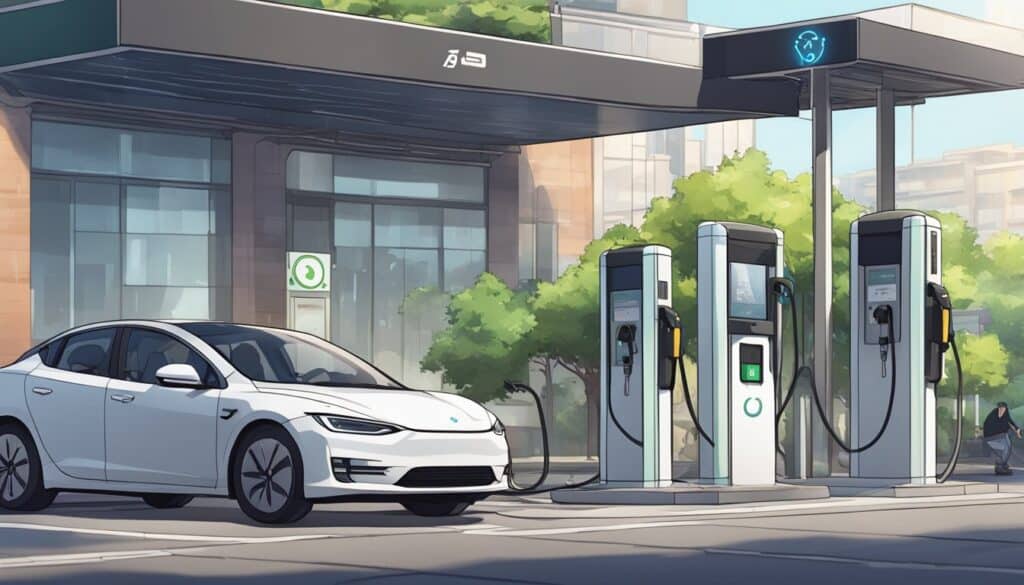
Public chargers come in several types: Level 2, rapid charging, and fast chargers.
Level 2 chargers are commonly found and provide a moderate charging speed. They are suitable for longer parking durations, such as at workplaces or shopping centers.
Fast chargers, like those provided by ChargePoint, offer quicker charging times and are ideal for shorter stops.
Rapid chargers provide the fastest charging speeds and are commonly located along highways and major roads. Tesla’s Superchargers are a well-known example of rapid charging stations.
Payment and Access Through Apps
Accessing and paying for public chargers is straightforward with the use of apps.
Many networks, such as Electrify America, allow users to pay directly with a credit or debit card at the charger.
Others require smartphone apps for authentication and payment.
For instance, the Electrify America app allows you to locate stations, start a charging session, and monitor charging progress.
Some networks offer membership plans that provide discounted rates and other benefits.
Several apps, like PlugShare and ChargePoint, can help you access a wider range of charging options.
Read Electric Vehicle Charging Business Model
Workplace Charging as a Viable Solution
Workplace charging is an increasingly popular option for EV owners without a driveway.
Many employers are now installing charging points in their car parks, offering a convenient solution for employees who need to charge their electric vehicles during work hours. This initiative helps to reduce the reliance on public charging stations.
Benefits of Workplace Charging:
- Convenience: Charging at work means your car is ready for the drive home.
- Cost Savings: Some companies offer free or subsidized charging, saving employees money.
- Reduced Range Anxiety: Regular access to charging can alleviate worry about running out of power.
Employers can also benefit.
Workplace charging can be an attractive perk, potentially helping with employee retention and recruitment.
It showcases the company’s commitment to sustainability and supports the transition to electric vehicles.
Implementing Workplace Charging
For employers, participating in initiatives like the Workplace Charging Scheme can help offset installation costs.
This scheme, supported by some local government associations, provides grants to cover a portion of the expenses.
Considerations for Employers:
- Infrastructure: Evaluate the existing electrical capacity and identify suitable locations for charging points.
- Policy: Establish a fair charging policy to avoid conflicts among employees.
- Support: Provide information sessions to educate employees about using the chargers.
Check out Tesla Charger Blinking Green When Not Plugged In
Home Charging Without a Driveway: Alternatives and Innovations
Charging an electric car without a driveway requires creative solutions. This section explores how tenants can work with landlords for installation, use home chargers in shared properties, and ensure safety when using extension leads.
Negotiating with Landlords for Installation
Tenants can propose the installation of a home charger to their landlords.
Emphasize the benefits, such as increasing property value and attracting future tenants.
Highlight that modern wallbox chargers are designed to be safe and compliant with local authority regulations.
An electrician can assess the property to ensure proper installation.
Hardwiring the charger into the building’s electrical system is often necessary.
Tenants should offer to handle or share installation costs.
It might also be easier to persuade a landlord if other tenants can use the charger, adding value to the property.
Using a Home Charger at Shared Properties
Communal charging points are an excellent solution in shared properties like apartments or condos.
Residents can suggest the installation of outdoor weather-rated chargers that can withstand rain and other elements.
These chargers should be installed in common parking areas and comply with building codes.
Residents should organize a meeting with property managers or the local authority to discuss the logistics and benefits.
Offering to contribute to the costs or creating a usage system for all tenants may help win approval.
Access and payment systems, such as a shared meter or individual cards, can ensure fair usage among residents.
Extension Leads and Safety Precautions
Safety is paramount when using an extension lead to charge an electric car.
Only high-quality, outdoor-rated extension leads should be used.
These leads should have proper insulation and be designed to handle the power requirements of a home charger.
Ensure the extension lead doesn’t cross sidewalks or create tripping hazards.
If it does, use protective coverings or seek temporary permission from the local authority.
To prevent electrical hazards, regularly inspect the extension lead for wear and tear and avoid using it during heavy rain.
Read How Many Miles Can a Tesla Go on One Charge?
Commercial and Destination Charging Opportunities
Electric car owners without a driveway can take advantage of numerous charging options available at commercial locations such as supermarkets, hotels, and gyms.
These alternatives are convenient and accessible, offering flexible ways to keep your vehicle charged.
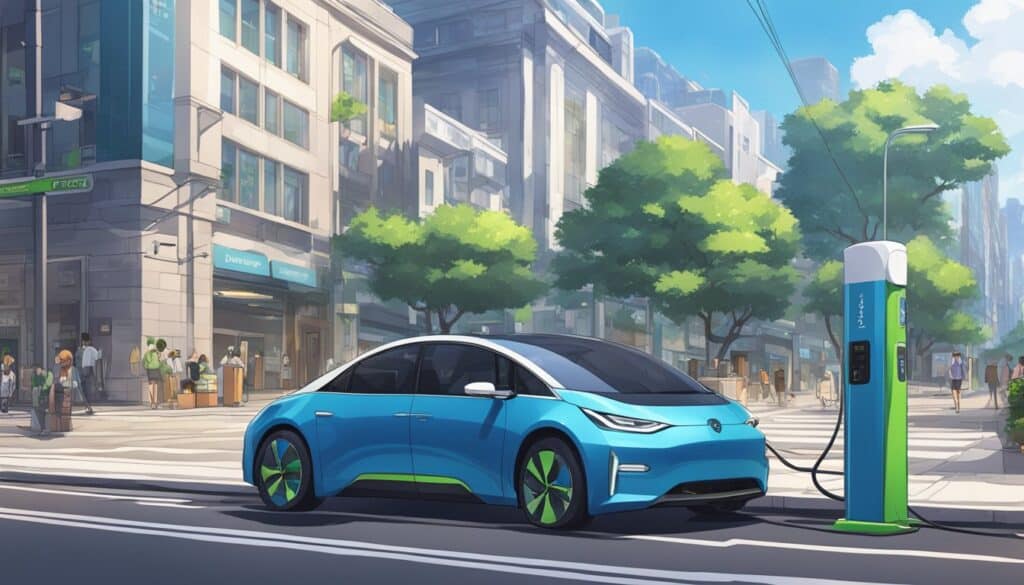
Leveraging Supermarket Car Parks Charging
Supermarket car parks often have dedicated EV charging stations.
This is particularly beneficial as these chargers are often conveniently located near the entrance.
Many supermarkets partner with charging networks to provide fast-charging options that can top up your battery while you shop.
Supermarkets such as Tesco and Sainsbury’s are known to provide these charging facilities.
While there is often a fee for using these chargers, the convenience and speed make it a worthwhile option for many.
Some supermarkets even offer discounted or free charging if you are a member of their loyalty programs.
Hotels and Gyms: Charging While You Stay or Workout
Many hotels and gyms have installed EV charging stations to attract customers.
When booking a stay at a hotel, check if they offer EV charging as part of their amenities.
This allows you to charge your car overnight without any hassle, making it ready for the next day’s journey.
Gyms like PureGym and local fitness centers also offer charging points.
This means you can work out while your car charges.
Checking the availability of charging stations at your gym can save you time and ensure your car is always ready to go.
Finding Free Charging Locations
Free charging stations can be found in various locations, often in public or commercial areas.
City councils sometimes provide free EV charging to promote green transportation.
Parking garages in city centers or near shopping districts might also offer free charging services.
Websites and apps such as Zap-Map or PlugShare can help you find these free charging spots.
Some supermarkets and retail outlets provide free charging while you shop, making it both economical and convenient for EV owners.
Utilizing these locations is a great way to save money on charging costs while keeping your car ready for the road.
Check out Tesla Says Ready To Charge But Not Charging
Off-Street Parking Solutions and Grants
Many electric car owners face challenges when they don’t have a driveway. Several solutions and grants can help overcome this issue.
Off-Street Parking: Off-street parking can be a practical solution.
Some residential areas have parking lots or garages where charging stations can be installed.
Local Council Initiatives: Many local councils offer support for electric car charging.
They can help identify suitable off-street parking areas and may oversee the installation of public charging points.
Government Grants: The UK government provides several grants to support electric vehicle owners.
One key grant is the On-Street Residential Chargepoint Scheme, which aids local councils in installing charge points in residential areas without off-street parking.
Permit Parking: In some regions, obtaining a permit for parking in designated areas with charging stations can be an effective solution.
These permits allow easy access to charging infrastructure.
Funding Examples:
| Initiative | Description |
|---|---|
| On-Street Residential Chargepoint Scheme | Assists local councils in installing charging points. |
| Local Electric Vehicle Infrastructure (LEVI) Fund | Provides substantial funding to improve local charging networks. |
| Parking Permits | Enable access to parking spaces with chargers. |
Alternative Solutions: Some workplaces and public parking facilities are setting up chargers.
Charging at work or in public places can supplement home charging needs.
Making Connections: Charging at a Friend or Family Member’s Place
Charging an electric car at a friend or family member’s place can be a great solution when you don’t have a driveway.
First, ensure you have permission to use their electric car charger.
Most home chargers are compatible with a wide range of electric cars, so compatibility shouldn’t be an issue. Always ask first to avoid any misunderstandings.
It’s a good idea to bring your own charging cable.
While many chargers come with a cable, having your own ensures you can connect without any issues. A portable charger can also be handy if their setup doesn’t include one.
Steps for Charging at a Friend or Family Member’s Place:
- Park the Car: Make sure your car is parked close enough to reach the charger.
- Connect the Charging Cable: Plug the charging cable into the electric car first, then into the home charger.
- Start Charging: Begin the charging process. Some chargers might require a card or app to start.
Advantages:
- Cost Savings: Avoid public charging fees.
- Convenience: Charge while visiting friends or family.
- Flexibility: Use this option whenever you’re in the area.
In some cases, discussing how the added electricity cost will be handled might be helpful.
Offering to cover the extra cost with a small payment can show appreciation and maintain good relations.
Charging at a friend or family member’s home provides a practical option for those without a driveway or home charger.
Read How to Commission Your Tesla Wall Charger?
Street Charging Innovations
Charging an electric car without a driveway is becoming easier thanks to new street charging innovations.
Key advancements include using existing infrastructure like lamp posts and bollards, and leveraging community-driven initiatives to increase access to charging points on residential streets.
Lamp Posts and Bollards as Charging Points
Local councils are converting lamp posts into electric car charging points in many cities.
This approach is practical because it uses existing infrastructure, making the installation process quicker and more affordable. Drivers can simply park by the kerb and plug in.
Bollards, typically used to manage traffic or provide security, are also being adapted as charging points.
These are installed at strategic locations along residential streets to ensure accessibility. These innovations allow residents to charge their electric vehicles without needing off-street parking.
Community-Driven Charging Initiatives
Some communities are taking charge of their electric vehicle charging needs through local initiatives.
Programs are set up where residents share their private charging units or advocate for shared public chargers.
In certain areas, cooperatives are formed to crowdsource funding to install new charging points on residential streets.
By working together, communities can ensure everyone has access, even those without driveways.
These initiatives foster a sense of collective ownership and encourage wider adoption of electric vehicles.
Preparing for the Future of EV Ownership
Electric cars are becoming more popular as people move away from petrol and diesel vehicles. Governments are banning traditional fuel cars to encourage this switch.
Future EV ownership will be more convenient with more fast and rapid charging options.
Fast chargers can fill up cars in less than an hour, while rapid chargers can do so in just 20-30 minutes.
Many cities are now providing charging solutions for those without driveways.
The On-Street Residential Chargepoint Scheme supports councils in installing more public chargers.
Octopus Energy is helping by creating new charging solutions.
Their services are designed to be easy and affordable for all EV owners.
Government grants and local initiatives are continuously expanding the charging network.
Programs like the On-Street Residential Chargepoint Scheme are vital for those who can’t charge at home.
Workplaces are also setting up EV chargers. This allows employees to charge their cars while at work, making it easier to own an electric car without a home charger.
Conclusion
Charging an electric car without a driveway is possible with several solutions.
On-street charging is becoming more common, and government grants are helping to install charge points in public areas.
Portable chargers offer another option.
These devices can be plugged into a standard wall outlet and provide a slow but steady charge. One such example is the Webasto Go, which can be used at home or on the go.
Regularly visiting charging destinations like supermarkets, gyms, and offices can also keep your car charged.
With more places offering charging facilities, this is a convenient way to top up your battery while running errands.
Lastly, some homeowners might qualify for grants that contribute to the cost of installing a home chargepoint.
Although traditionally available to those with driveways, the eligibility can be broader.

Hi, I’m Marybeth, an electric car enthusiast living in New York in the USA. As the owner of electriccartalks.com, I love sharing my knowledge on EV tips, battery maintenance, and charging solutions. As a proud Tesla owner, I blend my personal experiences with professional insights to offer valuable information to fellow EV enthusiasts. Through my articles, I aim to empower others to make informed decisions about their electric vehicles. Read more