
Electric cars are becoming more common on roads today. Many people wonder if these vehicles can be fixed after a crash. The answer is yes, but repairs can be tricky.
Electric cars can be repaired after an accident, but the process is often more complex than for gas-powered vehicles. The biggest challenge is dealing with the large battery packs. Even small damage to these batteries can lead to costly repairs. Some insurers may even decide to total the car if the battery is harmed.
Fixing an electric car after a crash needs special skills. Mechanics must be trained to work with high-voltage systems. They also need special tools and safety gear. This means not all auto shops can fix electric cars. Owners may need to take their cars to special repair centers after an accident.
Understanding Electric Vehicles and Accidents
Electric vehicles (EVs) have unique features that affect how they respond in accidents. Their design and technology create different safety considerations compared to traditional cars.
EV Technology Overview
EVs run on large battery packs and electric motors instead of gas engines. These batteries are often placed under the floor or in the trunk. EVs have fewer moving parts than gas cars. They use regenerative braking to slow down and charge the battery.
Key EV components include:
- High-voltage battery pack
- Electric motor(s)
- Power electronics
- Onboard charger
EVs are quieter and have instant torque. This can change how they handle in some situations.
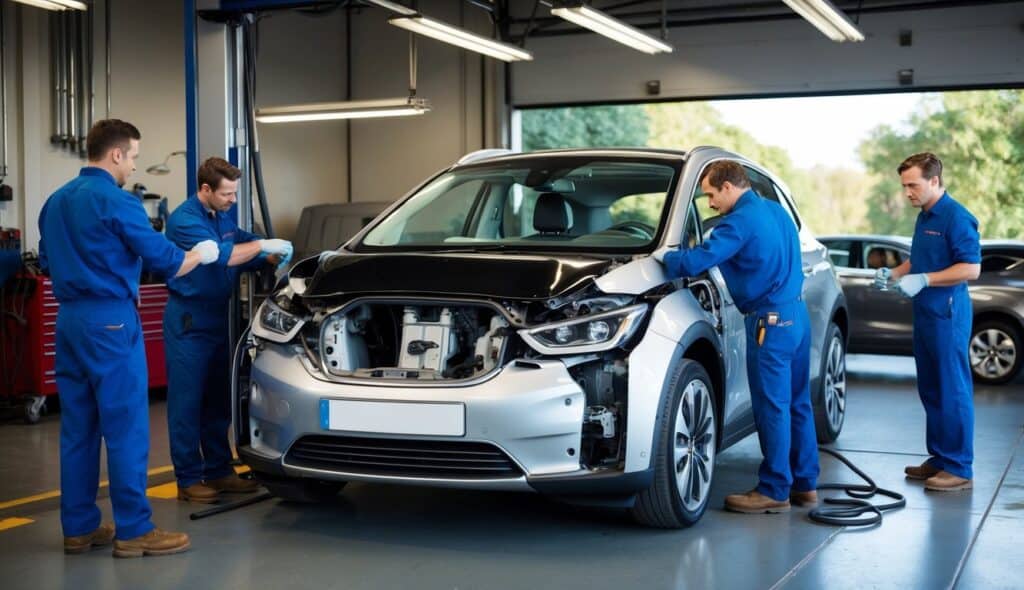
Common Types of EV Accidents
EV accidents can be similar to those of regular cars. Some common types are:
- Rear-end collisions
- Side impacts
- Front-end crashes
- Rollovers
Battery location can affect crash dynamics. Low center of gravity may reduce rollovers. But battery damage is a concern in underbody impacts.
Fire risks exist, but are rare. EV fires can be harder to put out and may reignite. Special training is needed for first responders.
Differences Between EV and Conventional Car Accidents
EVs have some unique accident traits:
- Silent operation can lead to pedestrian accidents
- High torque may cause more spin-outs
- Battery damage can create electrical hazards
Crash safety ratings for EVs are often good. Their heavy batteries can absorb impact forces. But repairs can be more complex due to high-voltage systems.
EV accidents may require special towing and storage. Damaged batteries need careful handling. Repair costs can be higher for EVs, especially for battery replacement.
Assessing the Damage
After an electric car accident, a careful damage assessment is key. Different parts of the vehicle need to be checked for safety and repair options.
Battery Damage and Safety Risks
The battery pack is a critical part to check after a crash. Even small impacts can harm it. Technicians look for dents, cracks, or leaks in the battery casing. They also test for internal damage.
Damaged batteries can pose fire risks. If the crash caused a battery breach, there’s a chance of electric shock. Trained experts must handle these checks.
Battery repairs are often costly. In some cases, the whole pack needs replacement. This can make even minor accidents expensive to fix.
Electric Motor and High-Voltage System Impacts
The electric motor and other high-voltage parts need close inspection. Accidents can damage wiring, connectors, or the motor itself.
Technicians use special tools to test these systems. They check for short circuits or broken connections. The car’s computer is also tested for error codes.
If the motor is damaged, it may need to be replaced. This can be a big expense. Sometimes, fixing wiring or replacing small parts can get the car running again.
Structural and Cosmetic Damages
Electric cars have unique structures. They often use lightweight materials to offset battery weight. Experts check the frame for bends or cracks.
The body panels are inspected for dents and scratches. Some damage may look minor but affect the car’s safety features.
Repair shops use special methods for electric car bodies. They must be careful not to damage hidden wires or battery components.
Cosmetic fixes can be simpler. But even small repairs need to be done right to protect the car’s systems.
Repair Costs and Insurance
Electric car repairs after accidents can be costly. Insurance plays a big role in covering these expenses. Let’s look at the costs, insurance options, and factors that affect premiums.
Average Repair Costs for Electric Cars
Electric cars often cost more to fix after crashes than gas cars. Their special parts and high-tech systems make repairs pricey. A small fender bender might cost $3,000 to $5,000 to fix on an electric car.
Big accidents can be even more expensive. If the battery gets damaged, it could cost $10,000 or more to replace. Some repairs might cost so much that insurance companies declare the car a total loss.
Repairs also take longer for electric cars. This is because fewer shops know how to fix them. Drivers might have to wait weeks for parts or skilled mechanics.
Insurance Claims and Coverage Options
Insurance for electric cars works like regular car insurance. It can cover crash damage, theft, and other problems. But there are some key differences.
Many insurers offer special electric car policies. These often include extra coverage for batteries and charging equipment. Some policies even cover the cost of towing to a special repair shop.
When filing a claim, drivers should look for repair shops that specialize in electric cars. This helps ensure proper repairs and might speed up the process.
Insurance companies are still learning about electric car repairs. As they gather more data, coverage options may change and improve.
Influencing Factors on Insurance Premiums
Several things affect insurance costs for electric cars:
- Higher repair costs often lead to higher premiums
- The car’s value and model matter a lot
- Where you live can change your rates
- Your driving history plays a big role
Some insurers offer discounts for electric cars. They see them as less risky in some ways. For example, electric cars are less likely to be stolen.
But the expensive parts can push rates up. Insurers might charge more to cover potential high-cost repairs.
As more electric cars hit the roads, insurance rates may change. Companies will have more data to set fair prices. This could lead to better deals for electric car owners in the future.
The Role of Repair Shops in EV Repair
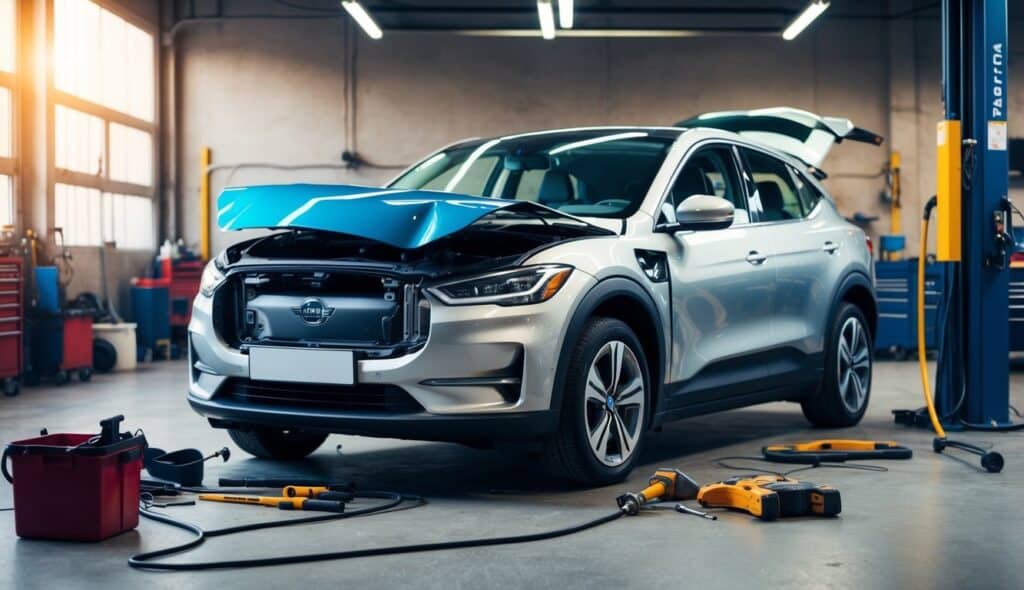
Repair shops play a crucial part in keeping electric vehicles on the road after accidents. They need special tools, training, and parts to fix EVs properly.
Certification and Specialized Equipment
EV repair shops need specific certifications to work on electric cars. These certifications show they can safely handle high-voltage systems.
Shops must invest in specialized tools for EV repair. This includes:
- Insulated tools
- Battery diagnostic equipment
- Electric motor testing devices
Many shops create dedicated EV repair bays. These areas have safety features like:
- Rubber floor mats
- Insulated work surfaces
- Special fire suppression systems
The cost of this equipment can be high. Some shops may struggle to afford it at first.
Technician Training and Expertise
EV repair needs skilled technicians. They must learn new skills beyond traditional car repair.
Key areas of expertise include:
- High-voltage system safety
- Battery management
- Electric motor diagnostics
- Software troubleshooting
Technicians often attend special courses. These teach them how to work on different EV brands.
Some shops partner with EV makers. This gives them access to the latest repair info and methods.
Ongoing training is important. EV tech changes fast, so techs must keep learning.
Availability of Replacement Parts
Getting EV parts can be tricky for repair shops. Many parts are only made by the car’s manufacturer.
This can lead to:
- Longer wait times for repairs
- Higher costs for some parts
- Limited options for aftermarket parts
Shops often work closely with EV makers to get parts. Some keep common EV parts in stock.
As more EVs hit the road, part availability should improve. This will help shops fix EVs faster.
Repair shops also learn to fix or rebuild EV parts when possible. This can save time and money for drivers.
Safety Considerations During Repair
Electric car repairs require special care due to their unique components. Safety is critical when working on these vehicles to protect technicians and maintain the car’s integrity.
Handling High-Voltage Components
EV batteries operate at high voltages that can be dangerous. Technicians must shut off the power system before starting repairs. Special insulated tools are needed to work on live electrical parts. Protective gear like rubber gloves and insulated mats help prevent shocks.
Batteries must be handled with extreme caution. Any damage could lead to fires or chemical leaks. Technicians should check for signs of battery damage before starting work.
Safety Equipment and Protocols
Repair shops need specialized safety equipment for EV repairs. This includes voltage detectors, insulated tools, and protective clothing. Fire extinguishers rated for electrical fires are essential.
Strict safety protocols must be followed. Only trained technicians should work on high-voltage systems. Clear markings identify dangerous areas. Safety barriers keep others away from the work area.
Regular safety training keeps technicians up-to-date on best practices.
Recalibration of Safety Features
After repairs, EV safety features need recalibration. This ensures they work correctly to protect passengers. Sensors, cameras, and other systems may need adjustment.
Technicians use diagnostic tools to check and reset safety systems. This includes recalibrating automatic emergency braking and lane-keeping assist. Airbag systems also need testing after repairs.
Proper recalibration is crucial for the car’s safety performance. It helps prevent future accidents caused by malfunctioning safety features.
Deciding to Repair or Replace
After an electric car accident, owners face a big choice: fix the car or get a new one. This decision depends on costs, damage, and environmental factors.
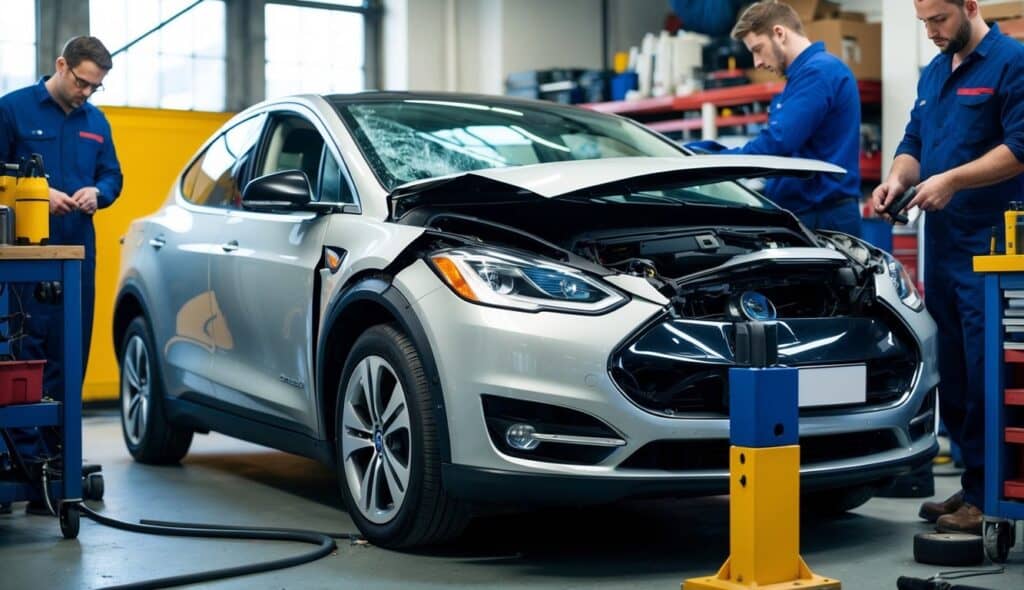
Factors Contributing to a ‘Total Loss’ Declaration
Insurance companies may declare an electric car a total loss if repair costs are too high. Battery damage is a key factor. A damaged battery pack can be very expensive to replace.
Structural damage to the car’s frame is another important issue. If the frame is badly bent, repairs might not be safe or cost-effective.
The car’s age and value also matter. Older electric cars with lower resale values are more likely to be totaled, even with minor damage.
Repair Versus Replacement Costs
Repair costs for electric cars can be higher than for gas cars. Special parts and trained technicians are needed. Battery repairs or replacements are often the most expensive.
Insurance companies compare repair costs to the car’s value. If repairs cost more than 70-80% of the car’s worth, they usually declare it a total loss.
Owners should get repair estimates from specialized shops. They can then compare these costs to the price of a new electric car. Sometimes, upgrading to a newer model with better range and features makes more sense.
Environmental Considerations of Repair vs Replace
Repairing an electric car can be better for the environment than replacing it. Making new cars uses a lot of resources and energy.
Fixing minor damage keeps the car on the road longer. This reduces waste and the need for new car production.
But badly damaged batteries can be a problem. They may not work as well after repairs. In these cases, replacing the whole car might be more eco-friendly in the long run.
Recycling electric car parts is important. Many components, especially in the battery, can be reused or recycled. This helps reduce the environmental impact of replacing a car.
Case Studies
Real-world examples show how electric cars fare after accidents. These cases highlight repair costs, challenges, and outcomes for different EV models and crash scenarios.
Tesla Model Y Accident and Repair
A Tesla Model Y owner in Brooklyn, NY faced high repair costs after an accident. The car’s complex battery system made repairs difficult. The damage was mainly to the front end, but it affected the high-voltage components.
The repair shop had to order special parts from Tesla. This took several weeks. The final bill was much higher than for a similar gas car crash.
The owner’s insurance covered most costs. But their rates went up after the claim. This case shows how EV repairs can be pricey and time-consuming.
Tesla Model 3 Collision Recovery
A Tesla Model 3 was in a side-impact crash. The car’s frame protected the battery pack well. This made repairs easier than in the Model Y case.
The body shop fixed the car in about two weeks. They replaced damaged panels and checked all electrical systems. The total cost was close to that of a gas car repair.
This case proves that not all EV accidents lead to extreme costs. The Model 3’s design helped keep repair costs down. The owner was back on the road quickly with minimal hassle.
Major vs. Minor Accident Repair Scenarios
EV repairs vary greatly based on accident severity. Minor scrapes or dents often cost the same as gas cars to fix. These repairs don’t usually affect the battery or electric systems.
Major crashes can be more complex for EVs. If the battery pack is damaged, costs skyrocket. Some insurers may total the car rather than pay for extensive battery repairs.
Here’s a quick comparison:
| Accident Type | EV Repair Complexity | Cost vs. Gas Car |
|---|---|---|
| Minor Scrape | Low | Similar |
| Fender Bender | Medium | Slightly Higher |
| Major Crash | High | Much Higher |
EV makers are working on easier-to-repair designs. This could help lower future repair costs and times.
Frequently Asked Questions
Electric car repairs after accidents involve unique considerations. Costs, safety precautions, and specialized expertise are key factors to keep in mind. Let’s explore some common questions about repairing electric vehicles after collisions.
What are the specialized considerations for repairing electric vehicles after a collision?
Electric cars need special care after crashes. Technicians must handle high-voltage systems safely. They use insulated tools and protective gear. The battery pack often needs careful inspection for damage.
Repair shops need specific equipment for electric cars. This includes battery lifts and charging stations. Technicians also need training to work on electric systems.
How does the cost of repairing an electric vehicle compare to a conventional car following an accident?
Electric car repairs typically cost more than conventional cars. In 2024, the average repair cost for electric vehicles was about $7,800. This is $2,400 higher than the average for all cars.
Several factors contribute to higher costs. Electric car parts are often more expensive. Repairs may require specialized tools and expertise. Labor costs can be higher due to the need for specially trained technicians.
What should one do with an electric car battery that has been involved in a crash?
A damaged electric car battery needs expert assessment. It may need to be replaced if severely damaged. Some batteries can be repaired or partially replaced.
Safe disposal is critical for damaged batteries. They should be handled by professionals to prevent fire risks. Recycling facilities can process damaged batteries properly.
Are there specific types of damage that could total an electric car more easily than a gasoline car?
Battery damage can lead to an electric car being totaled more easily. Even minor damage to the battery pack can be very expensive to repair. This can push repair costs close to or over the car’s value.
Structural damage near the battery is also a concern. It may compromise the battery’s safety systems. This type of damage often results in the car being declared a total loss.
Can traditional auto repair shops handle electric car accident repairs?
Many traditional shops are not equipped for electric car repairs. They may lack the necessary tools and training. Specialized equipment is needed to work on high-voltage systems safely.
Some shops are adapting to work on electric vehicles. They invest in training and equipment. It’s best to find a shop with specific experience in electric car repairs.
What safety concerns arise when an electric car is involved in a crash?
Electric cars can pose unique safety risks after a crash. There’s a risk of electric shock from damaged high-voltage components. First responders need special training to handle electric vehicle accidents.
Fire is another concern with damaged electric cars. Battery fires can be intense and hard to extinguish. Damaged batteries may reignite even after being put out. This requires special firefighting techniques and monitoring.
Conclusion
Electric cars can be repaired after accidents. Specialized technicians handle the unique components and high-voltage systems. Safety precautions are crucial during repairs.
Costs may be higher due to specialized parts and labor. Insurance coverage varies, so it’s important to check policies. Some repairs may take longer than traditional vehicles.
Proper documentation of accidents is key for insurance claims. Seeking legal help can be beneficial in complex cases. As electric vehicles become more common, repair processes will likely improve.
Advancements in technology may make future repairs easier and more affordable. Driver awareness of electric car safety features can help prevent accidents. Overall, while challenges exist, electric cars remain a viable and repairable option after collisions.

Hi, I’m Marybeth, an electric car enthusiast living in New York in the USA. As the owner of electriccartalks.com, I love sharing my knowledge on EV tips, battery maintenance, and charging solutions. As a proud Tesla owner, I blend my personal experiences with professional insights to offer valuable information to fellow EV enthusiasts. Through my articles, I aim to empower others to make informed decisions about their electric vehicles. Read more