
Electric vehicles (EVs) are becoming increasingly popular, not just for their eco-friendliness but also for their versatility.
As camping continues to be a favored outdoor activity, many campers are now looking to EVs for their unique features that enhance the camping experience.
What are the best electric cars available for camping?
This article explores the top five electric cars that are perfect for camping.
These vehicles offer a blend of comfort, efficiency, and innovative features, making them ideal for adventurers who want to embrace sustainable travel without sacrificing convenience.
1) Tesla Model X
The Tesla Model X is an excellent choice for camping due to its spacious interior and modern features.
This electric vehicle is known for its large cabin, making it comfortable for sleeping and storing camping gear.
Tesla’s Model X measures 199.1 inches long and 78.7 inches wide, offering plenty of space for passengers and cargo.
The car’s large panoramic windshield also enhances the camping experience by providing stunning views of the surroundings.
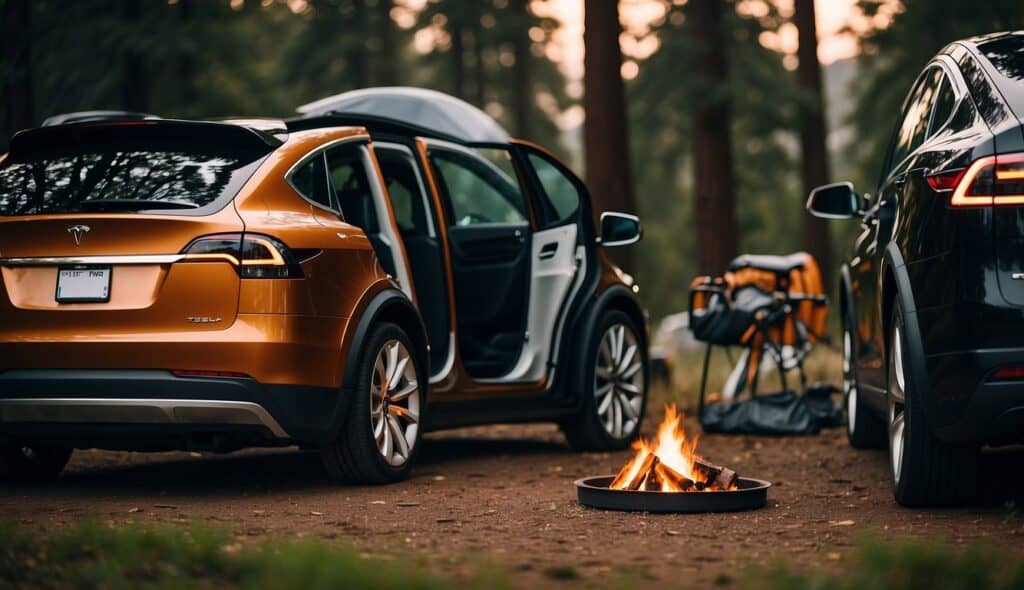
The car’s “Camp Mode” allows occupants to keep the climate control on, ensuring a comfortable temperature throughout the night.
Thanks to the car’s battery, this feature also powers devices, making it practical for those using gadgets like CPAP machines.
The Model X comes with a towing capacity of up to 5,000 pounds, making it easy to bring along a camper or additional gear.
Its electric range and multiple Supercharger stations make long trips feasible and reduce range anxiety.
The car’s middle row often features Captain’s Chairs, which many find more comfortable compared to bench seats.
These seats can be adjusted or removed to create extra space for sleeping arrangements.
The Tesla Model X also benefits from being an all-electric vehicle, thus producing zero tailpipe emissions.
This makes it a greener choice compared to traditional gasoline-powered cars, aligning well with eco-friendly camping practices.
Check out 11 Reasons Not to Buy an Electric Car
2) Rivian R1T
The Rivian R1T is a popular choice for camping due to its innovative features and capabilities.
Designed to handle off-road excursions, it offers a blend of ruggedness and luxury.
One standout feature is its spacious bed, which can be used to store camping gear. It also has a load of storage compartments, like the gear tunnel, which is perfect for keeping your equipment organized.
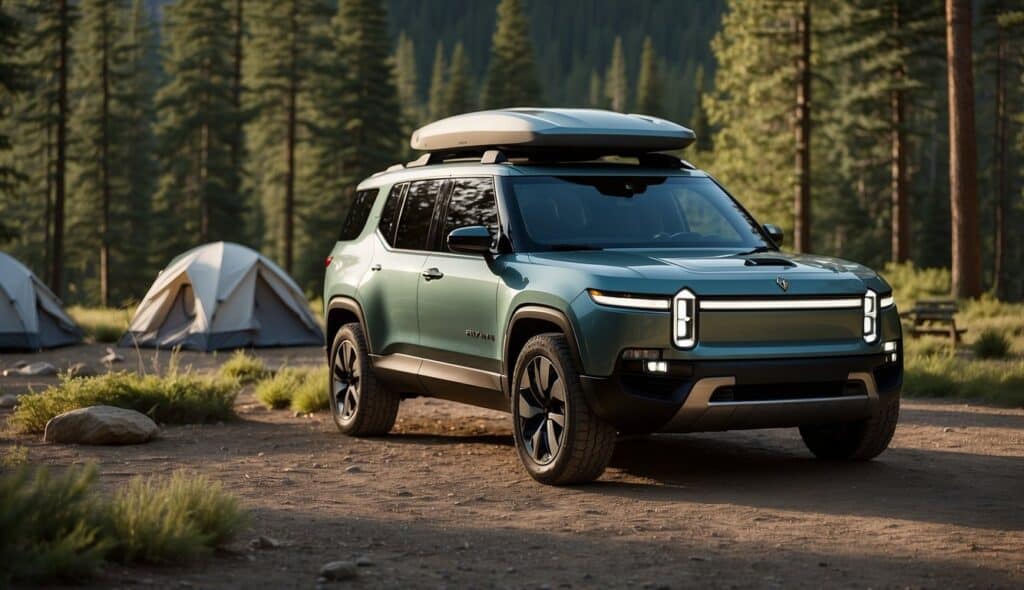
The R1T comes equipped with a camp kitchen option.
This feature includes a stove, sink, and all the necessary appliances, powered by the vehicle’s battery. This makes cooking in the wild convenient and eco-friendly.
Another advantage is its electric range. The Rivian R1T can travel up to 300 miles on a full charge, allowing for longer trips without worrying about recharging frequently.
This makes it practical for remote camping spots.
Rivian’s Adventure Network provides charging stations in remote areas, which is a helpful addition for those who enjoy extended camping trips. Testing of this network shows it fits the needs of adventurous journeys.
Cold weather performance is also reliable. Unlike some other electric vehicles, the R1T handles lower temperatures well, making it suitable for camping year-round, no matter the climate.
In summary, the Rivian R1T’s combination of storage space, cooking capabilities, battery range, and off-road performance makes it a top pick for camping enthusiasts.
The ability to travel long distances and stay charged ensures that adventure seekers can focus on enjoying nature.
Check out 1000 Mile Range Electric Car
3) Ford F-150 Lightning
The Ford F-150 Lightning is a top pick for camping enthusiasts who need a reliable and robust electric truck.
It offers full-time all-wheel drive, making it great for different terrains. This ensures that drivers can tackle rough paths and off-road conditions comfortably.
One of the standout features of the F-150 Lightning is its spacious cabin. The truck provides plenty of storage space, so packing all the necessities for a camping trip is easy. The rear seats can be folded to create more room for larger items.
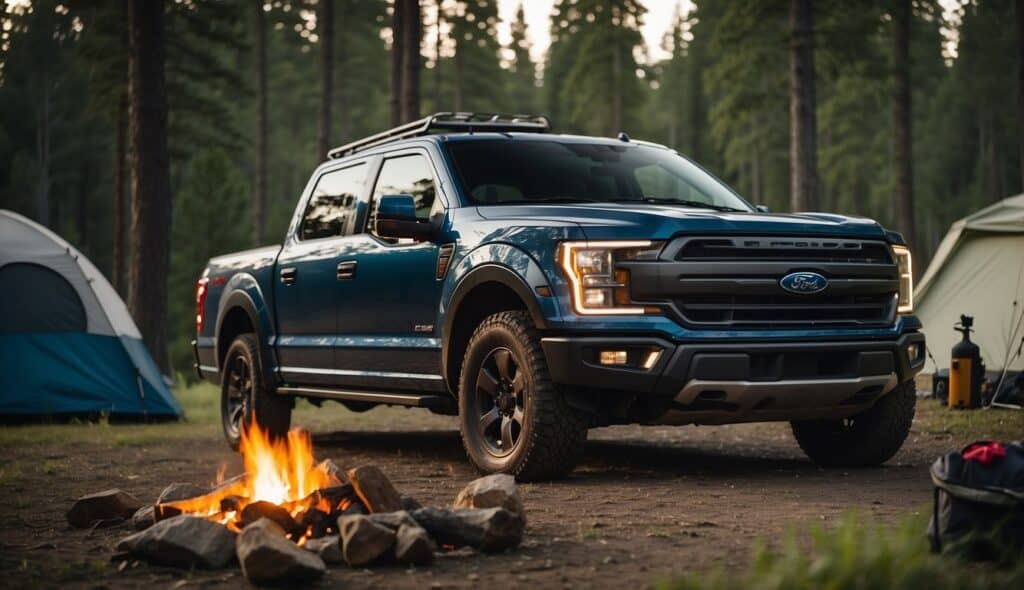
The F-150 Lightning boasts an impressive range, with the option to upgrade to an extended range battery.
This upgrade allows for up to 320 miles per charge, making it suitable for long camping trips without frequent recharging. This helps in planning trips where charging stations might be sparse.
The Lightning can deliver for those who want to use the truck as a power source while camping.
With its Pro Power Onboard feature, it can provide up to 9.6 kW of electricity. This allows campers to power multiple appliances and devices simultaneously, which is a significant advantage when camping off the grid.
Affordability is another strong point.
Starting at $49,995, it is more budget-friendly compared to other electric pickups like the Rivian R1T.
Potential buyers could also reduce the price further with a $7,500 federal tax credit, making it an even more attractive option.
While the base model does not come with all the bells and whistles, it offers essential features for camping.
Buyers might want to consider additional accessories, such as the charging station and transfer switch, to optimize their camping experience.
The familiar design of the trusty gas-powered F-150 is retained in the Lightning, offering a blend of the old and new.
This design maintains the robust build quality while integrating modern electric vehicle features, making it a dependable choice for outdoor adventures.
Read 5 Best Fastest Charging Electric Cars
4) Chevrolet Bolt EUV
The Chevrolet Bolt EUV is an excellent choice for camping enthusiasts. This electric vehicle combines ample space with a robust electric powertrain.
It offers a roomy interior, making it comfortable for car camping.
Charging at campsites is convenient with the Bolt EUV. Many campsites provide power hookups that can recharge the vehicle overnight. Using a 120v 30a camper hookup, campers can easily manage their vehicle’s power needs.
The Chevrolet Bolt EUV excels in providing a comfortable sleep setting.
Upgrading to an EUV gives you more legroom, translating to a better sleeping experience in the car.
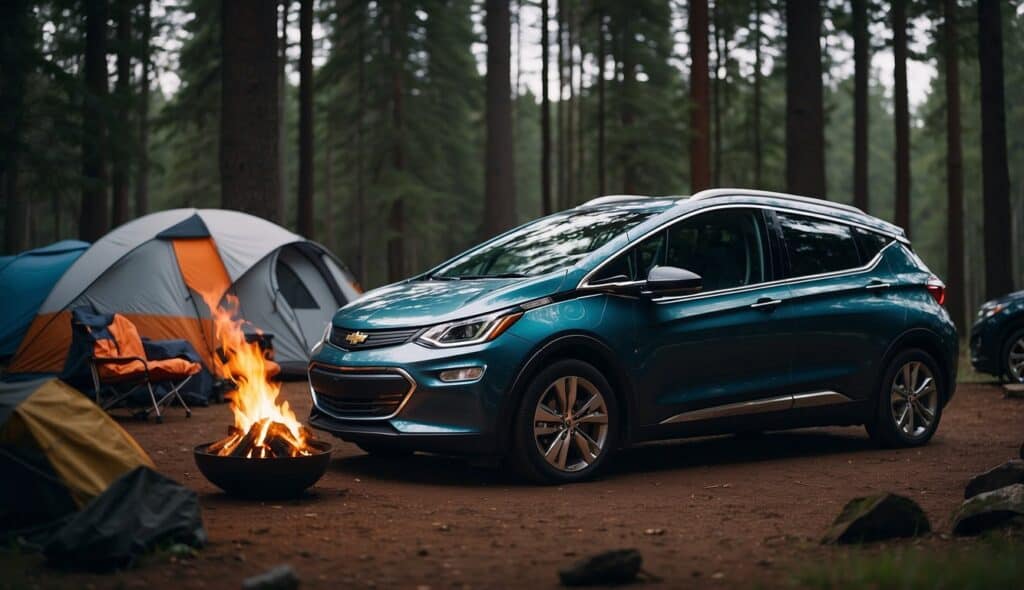
This model offers additional space compared to the standard Bolt EV, allowing for a more relaxed night in the wild.
Keeping the vehicle running and staying warm at night is straightforward.
The car can stay on in neutral and maintain power for essential functions. However, it’s good to note that the car will turn off after a couple of hours if left idle.
Camping with a Chevrolet Bolt EUV means not worrying too much about battery life.
You can expect only a minimal drain on the battery when camping, making it possible to camp almost anywhere.
With charging facilities, you can ensure your vehicle is ready for the drive ahead.
The acceleration is smooth and quick.
The front-mounted electric motor delivers instant torque, making trips to and from your campsite a breeze. Drivers will appreciate the responsive handling and brisk acceleration in everyday drives as well.
Read 9 Best Electric Cars for Tall Drivers
5) Hyundai Ioniq 5
The Hyundai Ioniq 5 stands out as an excellent choice for camping enthusiasts.
Its Vehicle to Load (V-2-L) system allows users to harness battery power for traditional 120V appliances.
This feature makes it possible to charge various devices, from cookers to portable refrigerators, making camping more convenient.
The Ioniq 5 comes with multiple battery options.
The long-range version provides up to 303 miles on a single charge, which is ideal for long trips to remote camping sites.
Additionally, its 800-volt architecture means it can charge quickly, reaching 80% in just 18 minutes at a fast-charging station.
The spacious and comfortable interior offers ample room for gear and supplies.
Foldable rear seats can expand the cargo area, making transporting larger items like tents and sleeping bags easier. With a flat floor in the cabin, it feels roomy and versatile.
Advanced safety features contribute to a worry-free camping experience.
Features like adaptive cruise control, lane-keeping assist, and blind-spot monitoring help drivers navigate safely, even on winding country roads.
Another significant advantage of the Ioniq 5 is its eco-friendly design.
Being fully electric, it has zero tailpipe emissions, which is better for the environment when exploring natural sites. This aligns well with the ethos of many outdoor enthusiasts who prioritize sustainability.
Moreover, the car’s stylish design and advanced technology give the traditional camping setup a modern touch.
With its combination of innovation, comfort, and functionality, the Hyundai Ioniq 5 becomes a solid pick for those looking to balance the outdoors with modern amenities.
Check out Best Electric Car for Cold Weather
Benefits of Electric Cars for Camping
Electric cars provide a range of benefits for campers. They offer eco-friendly travel, cost efficiency, and enhanced comfort and connectivity.
Eco-Friendly Travel
Electric cars produce zero tailpipe emissions, making them a cleaner option for the environment.
This helps reduce air pollution and the carbon footprint of camping trips. Many campsites are in areas that benefit from reduced vehicle emissions, preserving natural beauty and wildlife.
Using renewable energy to charge electric vehicles (EVs) further minimizes environmental impact.
Some campsites offer solar-powered charging stations, making it easier to maintain a green lifestyle while enjoying the great outdoors.
Electric cars often run more quietly than traditional gas vehicles.
This reduces noise pollution at campsites, allowing campers to enjoy the sounds of nature without interruption.
Cost Efficiency
Electric cars can be cheaper to maintain and operate compared to gasoline cars.
Charging an electric vehicle generally costs less than filling up a tank of gas, which can save campers money over time. There are also fewer moving parts in an electric car, resulting in lower maintenance costs.
Many places offer free or discounted charging for electric vehicles.
Campers can take advantage of these savings, further reducing the cost of their trips.
The initial purchase price of electric cars can be higher, but government incentives and rebates can offset this cost. Over time, the savings in fuel and maintenance often make up for the higher upfront cost.
Enhanced Comfort and Connectivity
Electric cars are often equipped with modern amenities that enhance the camping experience. Features like built-in climate control allow for a comfortable sleeping environment inside the car.
Some models offer flat-folding seats or even custom-made sleeping kits for added convenience.
Many electric cars come with advanced infotainment systems. These systems provide navigation, music, and internet connectivity, which can be particularly useful in remote camping locations.
Electric vehicles often have multiple charging ports and power outlets. Campers can use these to charge their devices or power other camping equipment, adding another layer of convenience to their outdoor adventure.
Check out 10 Best Electric Cars for Road Trips
Essential Features to Look for in an Electric Camper Car
Choosing an electric camper car involves considering key aspects like battery range, interior space, and safety features. These elements are crucial for a comfortable and secure camping experience.
Battery Range and Charging Options
Battery range determines how far you can travel on a single charge. For camping, a higher range means you can venture further without frequent stops.
Look for electric camper cars with advanced batteries that have high capacity.
Charging options are also important. Cars with multiple charging options, such as fast charging and portable chargers, offer more convenience.
Vehicles like the Volkswagen ID.4 may not have specialized camping features but do offer essential charging capabilities.
Interior Space and Design
Interior space is critical for comfort. A well-designed interior can make a big difference during extended stays.
Look for cars with foldable seats and ample storage.
Cars like the Rivian R1T come with spacious designs tailored for camping. Features like flexible sleeping arrangements and built-in storage for camping gear can enhance the experience.
Additional features, like climate control and comfortable seating, also add to the overall comfort.
Advanced Safety Features
Safety is paramount when camping in remote areas. Advanced safety features provide peace of mind and security.
Key safety elements include collision avoidance systems, lane-keeping assist, and emergency braking.
Electric vehicles like the Kia EV6, renowned for their safety technology, come equipped with features that ensure a safer journey.
These features are especially useful in unfamiliar terrains and during nighttime driving, enhancing overall safety for campers.
Check out 5 Best 600 Mile Range Electric Vehicles
Preparing for a Camping Trip with an Electric Car
Preparing for a camping trip with an electric car involves carefully considering charging options, what to pack, and how to plan your route. These factors ensure a smooth and enjoyable experience.
Charging Infrastructure and Accessibility
Before heading out, it’s essential to know where charging stations are located along your route and at your destination. Use apps or websites to find charging stations in advance.
Tesla Superchargers and EVgo are examples of networks that help with locating chargers.
Make sure you have the right adapters, as some stations might have different connectors. It’s a good idea to carry spare charging cables too.
Some campsites offer electric hookups which can be very useful. Also, plan your trip around places where you can charge overnight to ensure your vehicle is ready for the next day.
Packing Essentials
When packing for a trip with an electric car, it’s crucial to remember both camping and EV-specific items.
Beyond the usual camping gear like tents, sleeping bags, and cooking equipment, make sure to include items like portable chargers and solar panels if possible.
Maximize space by packing efficiently. Since many electric cars have spacious interiors, you can use foldable storage bins.
Consider bringing along a small toolkit for any minor repairs. Be mindful of the car’s weight capacity to avoid excessive drain on the battery.
Route Planning and Navigation
Planning your route is key to a successful camping trip with an electric car. Use navigation systems that cater to EVs, such as A Better Routeplanner or the EV Navigation app.
These tools can map out routes that include charging stations.
Prepare for longer travel times if your route requires frequent stops for charging. Make a note of places of interest where you can take breaks and recharge.
Check for road conditions and weather forecasts, as these can affect travel times and battery efficiency.
Conclusion
Choosing the best electric car for camping depends on various factors like range, comfort, and camping-friendly features.
For those who prioritize a versatile and comfortable option, the Hyundai Ioniq 5 stands out. It offers great camping features, a roomy interior, and advanced connectivity.
The Tesla Model Y is another top choice. It has a unique “Camp Mode,” which makes it easy to stay comfortable while enjoying the outdoors.
The Ford F-150 Lightning is ideal for those needing a robust vehicle. With up to 320 miles of range, it handles demanding camping trips effectively.
Hi, I’m Marybeth, an electric car enthusiast living in New York in the USA. As the owner of electriccartalks.com, I love sharing my knowledge on EV tips, battery maintenance, and charging solutions. As a proud Tesla owner, I blend my personal experiences with professional insights to offer valuable information to fellow EV enthusiasts. Through my articles, I aim to empower others to make informed decisions about their electric vehicles. Read more