
Electric car batteries are indeed made primarily of lithium. These batteries power the growing number of electric vehicles on roads today. They store energy to propel cars without using gasoline.
Most electric car batteries use lithium-ion technology because it offers high energy density and good recharging ability. The batteries also contain other materials like cobalt, nickel, and manganese. Car makers are working to improve battery designs to increase range and lower costs.
Mining the raw materials for electric car batteries impacts the environment. But electric vehicles produce fewer emissions over their lifetime compared to gas-powered cars. As battery tech advances, electric cars will likely become even more eco-friendly and affordable for more drivers.
Composition of Electric Car Batteries
Electric car batteries are complex devices made up of several key components and materials. They rely on specific chemical reactions to store and release energy efficiently.
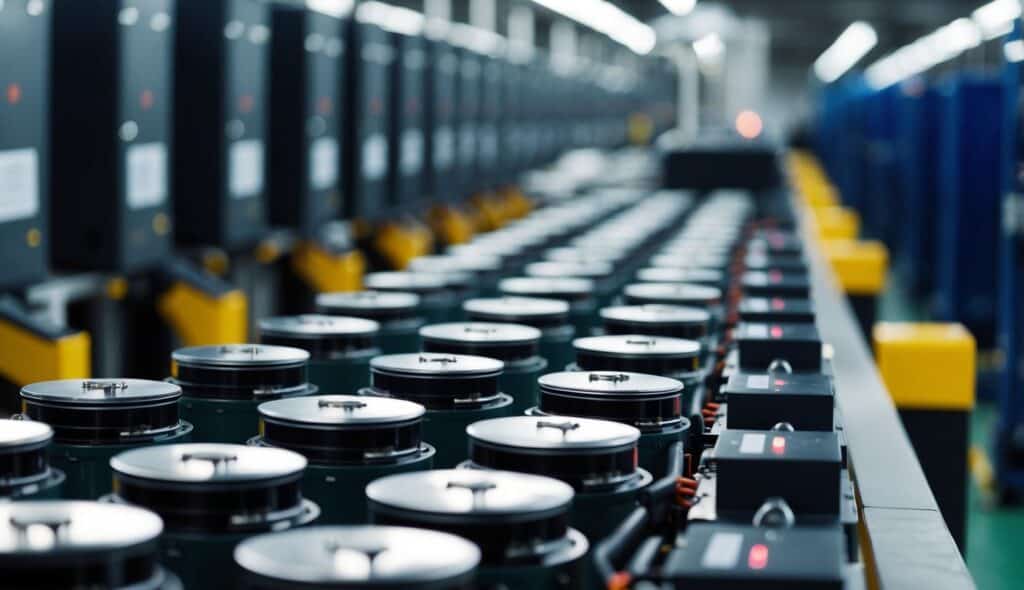
Key Components and Materials
The main parts of electric car batteries are:
- Battery cells
- Battery modules
- Battery pack
- Cooling system
- Battery management system
Lithium-ion batteries are the most common type used in electric vehicles. They contain lithium, cobalt, nickel, and manganese. These materials allow for high energy density and long battery life.
The amount of each material varies by battery design. A typical mix might be:
- 80% nickel
- 10% cobalt
- 10% manganese
Graphite is also important. It’s used in the anode of lithium-ion batteries.
Anode and Cathode Materials
The anode and cathode are key parts of a battery cell. They allow electrons to flow, creating electricity.
Anodes in electric car batteries are usually made of graphite. Some newer designs use silicon or lithium metal. These may offer higher energy density.
Cathodes use lithium metal oxides. Common types are:
- Lithium nickel manganese cobalt oxide (NMC)
- Lithium nickel cobalt aluminum oxide (NCA)
- Lithium iron phosphate (LFP)
Each type has pros and cons. NMC and NCA offer high energy density. LFP is cheaper and safer, but stores less energy.
Electrolytes and Separators
Electrolytes and separators are vital for battery function and safety.
The electrolyte allows ions to move between the anode and cathode. It’s usually a lithium salt in an organic solvent. Researchers are working on solid electrolytes for better safety.
Separators keep the anode and cathode apart. They’re thin, porous sheets that let ions pass through. Common materials are polyethylene and polypropylene.
Good separators prevent short circuits. They also help control the rate of charging and discharging.
Check out Workplace Electric Vehicle Charging Policy USA
Battery Architecture and Design
Electric car batteries have complex internal structures and systems to maximize power, efficiency, and safety. The design of these batteries involves careful consideration of cell configurations and management systems.
Battery Cells and Configurations
EV batteries use different cell types and arrangements. Cylindrical cells are common. They look like larger versions of regular batteries. Pouch cells are flat and rectangular. They save space but can be harder to cool.
Battery packs group many cells together. This boosts power and range. Packs can have hundreds or thousands of cells. The cells connect in series and parallel to get the right voltage and capacity.
Some cars use a single large pack. Others spread smaller packs around the vehicle. This helps with weight balance. It also protects the whole system if one part fails.
Battery Management and Cooling Systems
Battery management systems (BMS) are crucial for EV batteries. The BMS monitors cell voltage, temperature, and charge levels. It keeps the battery working safely and efficiently.
The BMS balances charge between cells. This prevents overcharging or undercharging. It also controls charging and discharging rates to protect the battery.
Cooling is vital for EV batteries. Heat can damage cells and reduce battery life. Most EVs use liquid cooling systems. These pump coolant around the battery pack. Some use air cooling, which is simpler but less effective.
Advanced cooling systems can heat batteries in cold weather. This improves performance and range in winter conditions.
Check out Workplace Electric Vehicle Charging Policy UK
Manufacturing Processes
Electric car batteries go through complex production steps. These processes ensure high-quality, efficient batteries for electric vehicles.
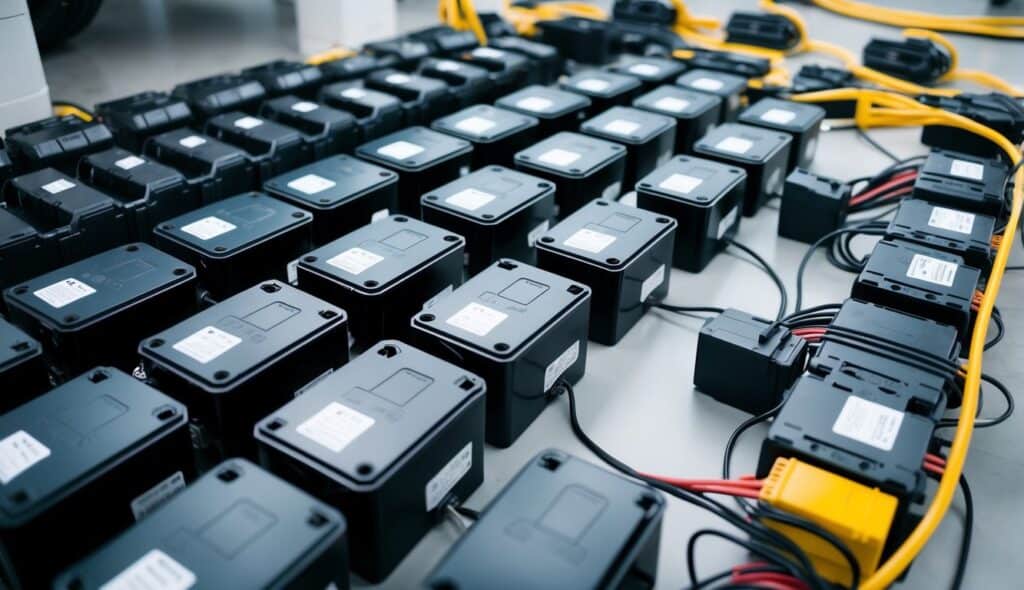
Production of Battery Components
Battery makers start with raw materials like lithium, nickel, and cobalt. They refine these into active materials for the cathode and anode. Workers mix these with binders and solvents to form a paste. Machines coat this paste onto metal foils.
The separator, a thin plastic film, is made separately. It keeps the cathode and anode apart while allowing ions to flow. Companies produce electrolytes by mixing lithium salts with solvents.
Assembly and Quality Control
Assembly begins with stacking or rolling electrode sheets with separators. This forms the battery cell core. Workers or robots place this core into a metal or plastic casing. They add electrolyte and seal the cell.
Cells undergo charging and testing cycles. Good cells are grouped into modules. Modules are combined to make battery packs. Each pack gets a protective casing and control systems.
Strict quality checks happen at every stage. Makers test for capacity, power output, and safety. Only batteries that pass all tests go into electric cars.
Performance Characteristics
Electric car batteries offer high energy storage and fast charging capabilities. These qualities make them well-suited for powering vehicles over long distances.
Energy Density and Charge Cycles
Lithium-ion batteries in electric cars have high energy density. This means they can store a lot of power in a small space. Most EV batteries provide 200-300 miles of range on a single charge.
Battery capacity is measured in kilowatt-hours (kWh). Larger batteries give longer driving ranges. A typical EV battery lasts for 1,000 to 2,000 charge cycles. This equals about 8-10 years of regular use.
Over time, batteries slowly lose capacity. After 8 years, many EV batteries still hold 70-80% of their original charge. Improved chemistry and thermal management help extend battery life.
Charging Speed and Behavior
EV batteries can charge at different speeds. Level 1 chargers use a regular home outlet. They add about 3-5 miles of range per hour. Level 2 chargers are faster, adding 25-30 miles of range per hour.
DC fast chargers are the quickest option. They can charge some EVs to 80% in 30-45 minutes. Charging slows down after 80% to protect the battery.
Cold weather can reduce charging speed and range. Many EVs have built-in battery heaters to help in cold climates. Hot weather can also impact battery performance, but less severely.
Check out How Long Do Electric Car Batteries Last?
Battery Safety and Sustainability
Electric car batteries require careful handling and proper management throughout their lifecycle. Safety measures and sustainable practices are key for maximizing their benefits while minimizing risks and environmental impacts.
Thermal Runaway and Mitigation
Thermal runaway is a major safety concern for lithium-ion batteries in electric vehicles. It happens when a battery cell overheats and causes a chain reaction. This can lead to fires or explosions.
Car makers use several methods to prevent thermal runaway:
- Battery management systems that monitor temperature
- Cooling systems to regulate battery temperature
- Protective casings around battery packs
- Safer battery chemistries that are less prone to overheating
If thermal runaway does occur, fire suppression systems can activate to contain the flames. Some EVs also have special vents to release heat and gases safely.
Recycling and Repurposing
Recycling EV batteries helps recover valuable materials and reduce waste. The process involves:
- Disassembling the battery pack
- Separating components like casings and wiring
- Crushing cells to extract materials
- Refining to recover metals like lithium, cobalt, and nickel
Many batteries can be repurposed for energy storage after their useful life in cars ends. This extends their lifespan before recycling.
Challenges remain in scaling up recycling. More efficient processes and better collection systems are needed. As battery tech improves, designs that make recycling easier will help boost recycling rates.
Innovations and Future Prospects
Electric car batteries are changing fast. New materials and designs promise longer ranges, faster charging, and lower costs. These advances will make electric cars more practical and appealing for many drivers.
Advancements in Battery Chemistry
Scientists are working on new ways to improve lithium-ion batteries. Some are adding silicon to anodes, which can hold more energy. This could boost driving range by 20-40%. Others are tweaking cathodes to use less cobalt, making batteries cheaper and more eco-friendly.
Researchers are also exploring new electrolytes. These could make batteries safer and able to work in wider temperature ranges. Some teams are testing solid electrolytes instead of liquid ones. This might prevent fires and allow for denser energy storage.
Emerging Battery Technologies
Solid-state batteries are a hot topic in EV research. They use solid electrolytes instead of liquid ones. This design could offer more energy density, faster charging, and better safety. Toyota and Volkswagen are investing heavily in this tech.
Lithium-sulfur batteries are another promising option. They can store more energy than current lithium-ion cells. This could mean lighter batteries or longer driving ranges. However, they still face issues with lifespan.
Some companies are even looking beyond lithium. Sodium-ion batteries, for example, could be cheaper and more sustainable. They might not match lithium’s performance, but could work well for shorter-range vehicles or energy storage.
Market Trends and Key Players
The electric vehicle battery market is expanding rapidly. China leads in production and demand, while other regions are working to catch up. Key players are innovating to improve battery performance and reduce costs.
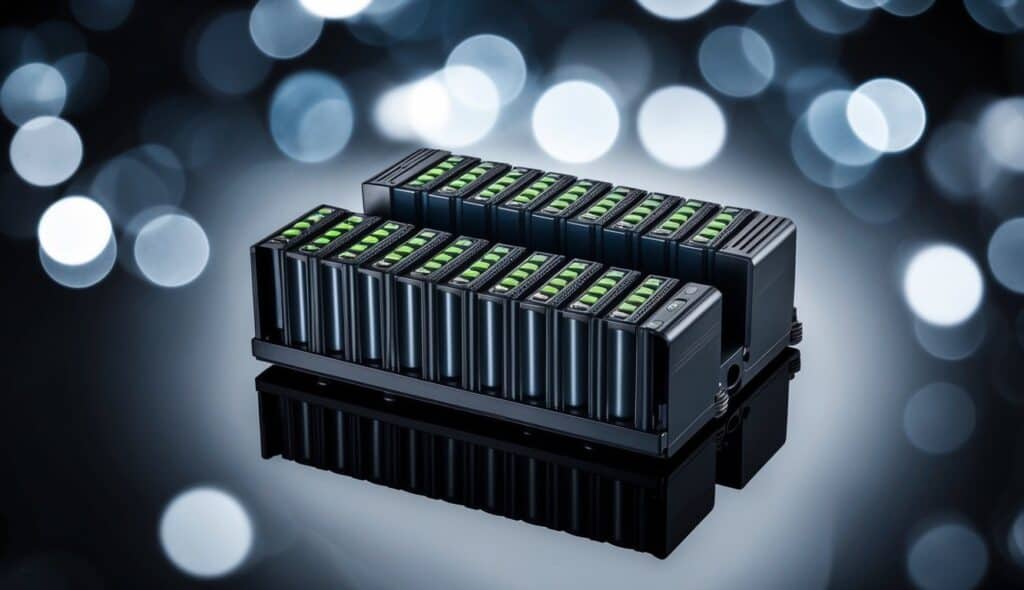
Leading Manufacturers
CATL and BYD are top EV battery makers. CATL holds the largest market share globally. BYD is growing fast, especially in China. Both companies focus on lithium-ion batteries.
Other major players include LG Energy Solution, Panasonic, and Samsung SDI. These firms supply batteries to big automakers like Tesla, Volkswagen, and Ford.
New entrants are also joining the market. Solid-state battery startups aim to create safer, more energy-dense options.
Companies are racing to secure raw materials. Many are forming partnerships with mining firms to ensure stable lithium supplies.
Global Battery Market Dynamics
The global EV battery market is growing fast. It’s expected to increase by 14.4% yearly from 2023 to 2033.
Lithium-ion batteries dominate the market. But new chemistries are emerging. LFP (lithium iron phosphate) batteries are gaining popularity, especially in China.
Battery demand grew 40% in 2023. The U.S. and Europe drove much of this growth. China remains the biggest market, with 415 GWh of battery demand in 2023.
Prices are falling as production scales up. This makes EVs more affordable. But supply chain issues and raw material costs can still cause price swings.
Frequently Asked Questions
Electric car batteries involve complex manufacturing processes and use various materials. Their production has environmental impacts and requires careful sourcing of raw materials. Several companies lead the industry in battery manufacturing.
What materials are used to manufacture electric car batteries?
Electric car batteries are made with lithium, cobalt, nickel, and graphite. These materials form the battery cells. Aluminum, copper, and steel are used for other battery components. The exact mix of materials can vary between different battery types and manufacturers. Some newer battery designs aim to reduce or replace certain materials to improve performance or cut costs.
How do manufacturers source the raw materials for electric vehicle batteries?
Battery makers get raw materials from mining operations around the world. Lithium comes from salt flats in South America and rock deposits in Australia. Cobalt is mined mainly in the Democratic Republic of Congo. Companies are working to make supply chains more ethical and sustainable. Some are partnering directly with mines or looking for new sources of materials.
What environmental impact do electric car batteries have?
Mining for battery materials can harm local ecosystems. It uses a lot of water and energy. The process creates waste that must be carefully managed. Battery production also generates carbon emissions. But over their lifetime, electric cars produce less total emissions than gas-powered cars in most cases.
Can electric car batteries be produced without using lithium?
Most current electric car batteries use lithium. It’s hard to make batteries without it that perform as well. Some new battery types use less lithium or try to replace it entirely. Sodium-ion batteries are one alternative being developed. They work similarly to lithium-ion batteries but use more common materials.
Which companies are the leading manufacturers of electric vehicle batteries?
Top electric vehicle battery makers include CATL, LG Energy Solution, and Panasonic. BYD and Samsung SDI are also major players in the industry. Tesla makes its own batteries in partnership with Panasonic. Many car companies are now investing in battery production to secure their supply.
How much lithium is typically required to produce a battery for an electric car?
An average electric car battery uses about 8-10 kg of lithium. Bigger batteries for longer-range cars need more. Smaller batteries for hybrid cars use less. The amount of lithium needed may decrease as battery technology improves. New designs aim to use lithium more efficiently or reduce the total amount needed.
Conclusion
Electric car batteries are indeed made primarily of lithium. This lightweight metal plays a key role in creating high-density, rechargeable batteries for EVs. Lithium-ion batteries offer high voltage and excellent charge capacity.
The manufacturing process for EV batteries involves several steps. It starts with extracting raw materials like lithium. Then comes processing and refining these materials. Next is assembling the battery cells and packs.
Making EV batteries does create some environmental concerns. Mining lithium and other materials has impacts. The production process also generates waste. But efforts are underway to improve sustainability.
As battery technology advances, costs are coming down. This makes electric vehicles more affordable. Improved batteries also increase driving range and performance.
EV batteries continue to evolve. New designs and materials are being developed. These aim to boost efficiency, lower costs, and reduce environmental impacts. The future of electric car batteries looks promising as innovation drives the industry forward.
You may also like:
- How Much Does It Cost to Charge an Electric Car at Walmart?
- What Is the Most Important Component of an Electric Vehicle Battery?
- Where Can I Charge My Electric Car for Free?

Hi, I’m Marybeth, an electric car enthusiast living in New York in the USA. As the owner of electriccartalks.com, I love sharing my knowledge on EV tips, battery maintenance, and charging solutions. As a proud Tesla owner, I blend my personal experiences with professional insights to offer valuable information to fellow EV enthusiasts. Through my articles, I aim to empower others to make informed decisions about their electric vehicles. Read more