
Electric vehicle (EV) ownership is rising in the UK. This trend is pushing workplaces to think about charging options for employees. A clear workplace EV charging policy is key for companies to manage this new need.
The UK government supports workplace EV charging through tax breaks and grants. Employers don’t have to pay income tax or National Insurance on charging electric cars at work. There’s also a Workplace Charging Scheme that helps cover the costs of buying and installing chargers.
Setting up a workplace EV charging policy helps companies plan for the future. It can cover who can use the chargers, how much to charge, and when charging is allowed. A good policy makes sure the system is fair and easy to use for all employees.
Overview of Workplace Electric Vehicle Charging in the UK
Workplace charging plays a key role in supporting electric vehicle adoption in the UK. Many employers now offer charging facilities to help staff transition to cleaner transportation.
Importance of EV Chargepoints in Workplaces
EV chargepoints at work make it easier for employees to switch to electric cars. They allow drivers to top up batteries during the workday. This extends driving range and reduces range anxiety.
Workplace charging helps those without home chargers. It’s vital for people living in flats or houses without driveways. Employees can arrive with a low battery and leave fully charged.
Companies benefit too. EV chargers show a commitment to sustainability. They can help attract and keep talented staff. Some businesses even use chargers to power their own electric vehicle fleets.
The Role of OZEV and WCS
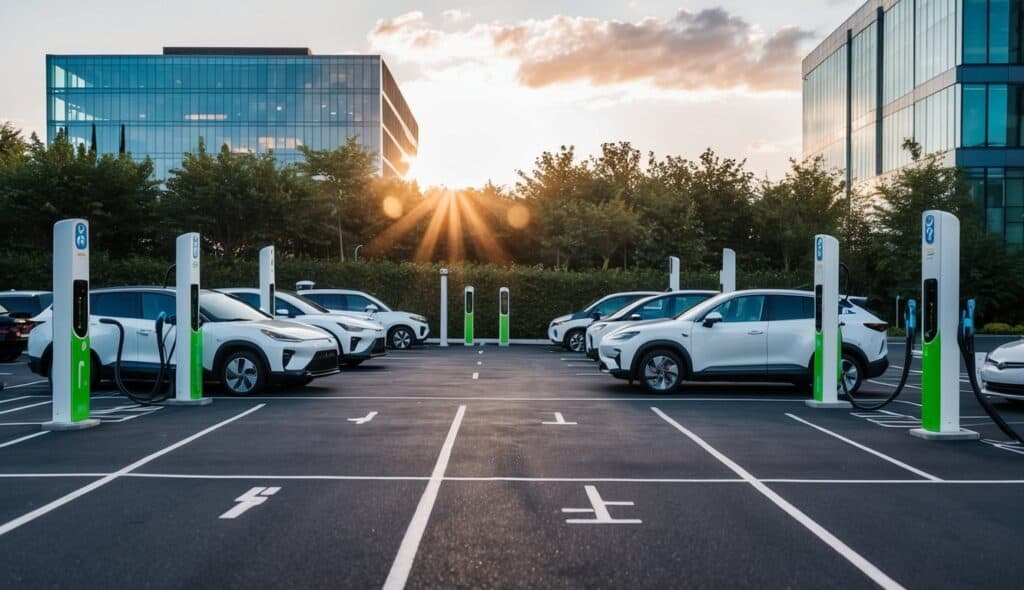
The UK government supports workplace charging through grants and schemes. The Office for Zero Emission Vehicles (OZEV) oversees these programs.
The Workplace Charging Scheme (WCS) is a key initiative. It gives businesses vouchers to cut charger costs. Companies can get up to £350 per socket for up to 40 charge points.
This scheme covers 75% of purchase and installation costs. It aims to boost charger numbers across the UK. The WCS makes it cheaper for employers to offer this perk to staff.
Challenges and Opportunities
Installing workplace chargers isn’t always simple. Employers face some hurdles:
- High upfront costs (even with grants)
- Limited parking space
- Need for electrical upgrades
But there are big chances too. Smart charging can save money on energy bills. Some companies let employees use chargers for free as a job perk.
Workplace charging supports the UK’s push for cleaner transport. It helps more people make the switch to electric cars. As EV numbers grow, so does the need for charging at work.
Eligibility Criteria for Workplace Electric Vehicle Charging
The Workplace Charging Scheme (WCS) offers support for installing electric vehicle chargepoints. Specific rules determine which employers and vehicles qualify. The criteria differ slightly for charities and small businesses.
Qualifying Employers and Organisations
The WCS is open to a range of employers. Businesses of all sizes can apply. This includes private companies and public sector groups.
Charities are also eligible. They must be registered with the Charity Commission.
Small accommodation businesses like B&Bs can qualify too. They need to be VAT-registered or HMRC-registered as a business.
Public sector bodies like schools, hospitals, and local councils can take part.
Applicants need a Companies House reference number or HMRC registration letter.
Types of Electric Vehicles Supported
The WCS supports chargepoints for battery electric vehicles and plug-in hybrids.
Pure electric cars with no petrol engine are covered.
Plug-in hybrid cars that can charge from the mains are included.
Electric vans and trucks qualify if they’re used for business.
Electric motorbikes and scooters are eligible too.
The scheme doesn’t cover non-plug-in hybrids or conventional petrol/diesel vehicles.
Specific Requirements for Charities and Small Businesses
Charities have some extra rules to follow. They must own, lease, or have ordered an eligible electric vehicle.
Small accommodation businesses need to meet certain criteria:
- Have off-street parking
- Be open at least 14 weeks per year
- Allow public use of chargepoints
Both groups can claim up to £350 per socket. They’re limited to 40 sockets across all sites.
They need to keep the chargepoints for at least 3 years. Regular reports to OZEV are required.
Financial Aspects of EV Charging Infrastructure
Setting up EV charging at work involves costs and potential savings. Employers can benefit from grants, tax breaks, and long-term financial gains.
Grants and Financial Support
The UK government offers grants to help businesses install EV chargers. The Workplace Charging Scheme covers up to 75% of installation costs, with a max of £350 per socket. Businesses can claim for up to 40 sockets.
Local councils may provide extra funding. Some energy companies also offer grants or discounts for workplace charging points.
To apply, businesses must meet eligibility rules. These include having dedicated off-street parking and using approved installers.
Tax Savings for Employers
Installing EV chargers can lead to tax savings. Businesses can claim 100% first-year allowances on EV charge points. This lets them deduct the full cost from profits before tax.
Providing free charging for employees isn’t a taxable benefit. This saves both the employer and employee on tax and National Insurance.
Companies may also save on fuel costs if they switch their fleet to electric vehicles. EVs often have lower running costs than petrol or diesel cars.
Minimal Financial Assistance and State Aid
Some EV charging grants count as ‘minimal financial assistance’ under UK subsidy rules. This means there are limits on how much aid a business can get.
The current limit is £315,000 over 3 tax years. Businesses must check they don’t exceed this when applying for EV charging grants.
Companies in certain sectors like agriculture may have lower limits. It’s important to keep records of all state aid received.
If unsure, businesses should seek advice to ensure they comply with state aid rules when getting EV charging grants.
Installation Process for Chargepoints
Installing workplace EV chargepoints involves selecting an approved installer, understanding costs, and choosing from a list of approved models. These steps help businesses set up charging infrastructure smoothly and cost-effectively.

Choosing an Authorised Installer
To install workplace charge points, businesses must use an authorised installer. The UK government maintains a list of approved installers who meet safety and quality standards. These professionals have the right training and certifications to set up EV charging systems properly.
Businesses can find authorized installers through the government’s official website or by contacting EV ChargePoint manufacturers. It’s wise to get quotes from multiple installers to compare prices and services.
When picking an installer, ask about their experience with workplace setups and check customer reviews. A good installer will also help with the paperwork for any available grants.
Understanding Installation Costs
Installation costs for workplace chargepoints can vary widely. Factors that affect the price include:
- Number of charging points
- Type of chargers (slow, fast, or rapid)
- Distance from the power supply
- Need for groundwork or electrical upgrades
The Workplace Charging Scheme offers financial help. It covers up to 75% of purchase and installation costs, with a max of £350 per socket. Businesses can get this support for up to 40 sockets across all their sites.
To keep costs down, plan the installation carefully. Put chargepoints close to existing power supplies if possible. Also, think about future needs to avoid costly upgrades later.
Approved Commercial Chargepoint Model List
The UK government maintains a list of approved commercial chargepoint models. These chargers meet safety and performance standards. Businesses must choose from this list to qualify for government grants.
The list includes various types of chargers:
- Slow chargers (3-7kW)
- Fast chargers (7-22kW)
- Rapid chargers (50kW+)
Each model on the list has details about its power output, connector types, and special features. Some chargers offer load balancing to manage power use across multiple vehicles.
When picking a model, think about how employees will use the chargers. Fast chargers work well for short stops, while slow chargers suit all-day parking. Also, check if the chargers are smart-enabled for easier management and billing.
Legal and Tax Implications for Employers
UK employers offering workplace EV charging face several important tax and legal considerations. These impact how charging is treated for tax purposes and what requirements must be met.
HMRC Regulations and BIK Tax
HMRC currently views workplace EV charging as a taxable benefit in kind. This means employees may need to pay tax on the value of electricity used to charge their cars at work. However, there are some exceptions.
Charging for company-owned electric vehicles is not taxable. For personal EVs used for business, employers can claim tax relief on the electricity costs. The tax treatment differs between pure electric and hybrid vehicles.
HMRC does not consider electricity as fuel for tax purposes. This impacts how reimbursements for home charging of company cars are handled.
Dedicated Off-Street Parking Requirements
Employers must provide dedicated off-street parking areas for EV charging stations. This ensures safe access and prevents cables from creating trip hazards. The number of spaces needed depends on employee demand and building regulations.
Proper signage is required to mark EV charging bays. Employers should consider future expansion when planning parking layouts. Accessibility for disabled drivers must be factored in. Regular maintenance of parking areas helps avoid liability issues.
Company Car Policies and Electric Vehicles
Company car policies need updating to address EVs. This includes rules on personal use, charging reimbursements, and mileage rates. Employers must decide whether to offer EVs as company cars and under what terms. Lower benefit-in-kind tax rates make EVs attractive options.
Policies should cover home charging for company EVs. Guidelines on proper care and charging of vehicles are important. Employers may need to provide training on EV use. Clear communication about policy changes helps smooth the transition to electric fleets.
Employee and Public Engagement
A workplace EV charging policy needs clear communication and thoughtful implementation. Engaging employees and the public helps promote adoption and smooth operation of charging facilities.
Communicating with Employees
Companies should inform staff about EV charging options through multiple channels. This can include emails, intranet posts, and staff meetings. Key points to cover:
- Locations of charging stations
- How to access and use the chargers
- Costs and payment methods
- Rules for sharing chargers
It’s helpful to create a simple guide or FAQ document. This can answer common questions and outline proper charging etiquette. Regular updates keep employees informed about any changes to the policy or equipment.
Availability to Customers and Public Parking
Some businesses may choose to offer EV charging to customers or the public. This can attract eco-conscious patrons and show commitment to sustainability. Points to consider:
- Clearly mark public charging spots
- Set time limits to ensure fair access
- Post clear instructions for use
- Decide on pricing (free or paid)
Installing chargers in visitor parking areas makes them easy to find. Signs can direct EV drivers to available charging spots. It’s important to balance employee and public access to keep everyone happy.
Addressing Range Anxiety
Range anxiety is a common worry for EV drivers. Workplace charging can help ease these concerns. Steps to reduce range anxiety:
- Install enough chargers to meet demand
- Use fast chargers where possible
- Provide real-time info on charger status
- Offer backup charging options
Educating employees about local public charging networks is also useful. This helps them plan longer trips with confidence. Some companies partner with charging networks to offer staff discounts, further easing range worries.
Best Practices and Future Outlook
Workplace EV charging policies in the UK are evolving rapidly. Smart planning and adaptability are key to successful implementation.
Adhering to Installation Best Practices
Proper installation of charging equipment is vital. Businesses should work with certified charge point manufacturers and installers. The Office for Zero Emission Vehicles offers guidance on this process.
In England, Wales, Scotland, and Northern Ireland, local building codes must be followed. Safety is a top priority. Chargers need proper weather protection and clear signage.
Regular maintenance checks keep chargers working well. This helps avoid downtime and keeps employees happy. It’s smart to have a mix of slow and fast chargers to meet different needs.
Anticipating Future EV Infrastructure Needs
EV adoption is growing fast. Workplaces need to plan for increased demand. This means leaving room for more chargers in the future.
Smart charging systems can help manage electricity use. They can balance the load across chargers and avoid peak energy times.
Some companies are looking into battery storage. This can help manage energy costs and provide backup power.
It’s also good to think about different types of EVs. Some may need different connectors or charging speeds.
Continual Assessment and Improvement
Regular surveys can help understand employee needs. This data can guide future charging policies.
Tracking usage patterns is helpful. It shows when chargers are busiest and if more are needed.
Staying up to date with new tech is important. Wireless charging might become more common in the future.
Policies should be flexible. They may need to change as more people use EVs. Clear communication about any changes is key.
Comparing notes with other businesses can provide new ideas. Industry forums and local business groups are good places to share knowledge.
Application Procedure for WCS
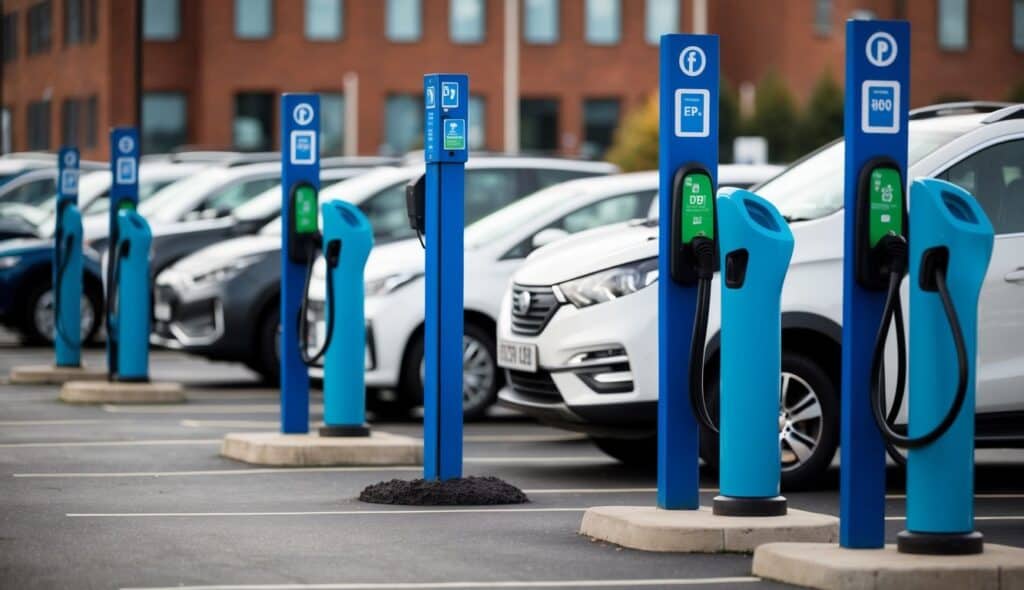
The Workplace Charging Scheme (WCS) offers support for businesses to install electric vehicle charging points. The application process involves several steps and uses an online platform.
Step-by-Step Application Process
- Check eligibility: Make sure your business qualifies for the WCS.
- Gather required information: Collect details about your organization and planned charging points.
- Create an account: Set up an account on the official WCS website.
- Fill out the form: Enter all necessary information accurately.
- Submit application: Review and send your completed form.
- Wait for approval: The government will assess your application.
- Receive voucher: If approved, you’ll get a voucher code by email.
Online Application Platform
The WCS uses a dedicated online system for applications. This platform is user-friendly and guides applicants through each step.
Key features:
- Secure login
- Clear instructions
- Ability to save progress
- Option to upload documents
Applicants can access the platform 24/7. It works on computers, tablets, and smartphones.
Post-Application Steps
After submitting your WCS application:
- Check your email often for updates or requests for more information.
- If approved, you’ll get a voucher valid for 4 months.
- Choose an approved installer from the government’s list.
- Schedule the installation of your charging points.
- The installer will claim the grant using your voucher code.
- You pay the remaining costs not covered by the grant.
- Keep all paperwork related to the installation and grant for your records.
Frequently Asked Questions
Workplace EV charging policies in the UK involve several key considerations for businesses. These include government support, tax implications, usage guidelines, and reimbursement options.
What policies should a UK workplace follow for providing electric vehicle charging to employees?
UK workplaces should create clear policies for EV charging. These policies should cover who can use the chargers, when they can be used, and any costs involved. It’s important to be fair and transparent.
Businesses should also think about safety rules and how to handle high demand. They may want to set time limits for charging or create a booking system.
How does the Workplace Charging Scheme support the installation of EV chargers in businesses?
The Workplace Charging Scheme helps UK businesses install EV chargers. It offers a grant to cover some of the costs. Businesses can get up to £350 per socket for up to 40 sockets.
To apply, businesses must meet certain criteria. They need to have dedicated off-street parking for staff or fleet vehicles.
Is employee usage of workplace electric vehicle chargers considered a taxable benefit in kind by HMRC?
HMRC does not currently treat workplace EV charging as a taxable benefit in kind. This means employees can charge their cars at work without paying extra tax.
This rule applies to both all-electric and plug-in hybrid vehicles. It’s meant to encourage more people to switch to electric cars.
What are the guidelines for using electric vehicle chargers in UK workplaces?
Guidelines for using EV chargers at work vary by company. Common rules include:
Only use designated parking spots for charging
Move your car once it’s fully charged
Follow any time limits set by the company
Report any issues with chargers to facilities management
Some workplaces may also ask employees to book chargers in advance.
How can businesses in the UK get reimbursed for electric vehicle charging provided to employees?
Businesses have a few options for getting reimbursed for employee EV charging:
Charge a flat fee for using the chargers
Bill based on the amount of electricity used
Include charging costs in overall parking fees
Some companies use special apps or systems to track usage and bill employees accurately.
Do state-funded educational institutions in the UK qualify for the Workplace Charging Scheme?
Yes, state-funded schools and colleges in the UK can apply for the Workplace Charging Scheme. They must meet the same criteria as other organizations.
These institutions need to have dedicated off-street parking for staff. The chargers must be for staff use, not for students or visitors.
Conclusion
Workplace EV charging policies in the UK are becoming more important. They help companies support sustainable transportation. These policies also benefit employees who drive electric vehicles.
Clear guidelines make charging at work smoother. They cover who can use chargers and when. Good policies also address costs and maintenance.
The UK government offers incentives for workplace charging. This includes the Workplace Charging Scheme. It gives businesses money to install charge points.
Companies should review their policies regularly. EV technology and regulations change fast. Staying up-to-date helps businesses and employees alike.
With thoughtful policies, workplaces can encourage EV adoption. This supports green initiatives and can attract eco-conscious talent. It also prepares companies for a future with more electric vehicles on the roads.
You may also like:

Hi, I’m Marybeth, an electric car enthusiast living in New York in the USA. As the owner of electriccartalks.com, I love sharing my knowledge on EV tips, battery maintenance, and charging solutions. As a proud Tesla owner, I blend my personal experiences with professional insights to offer valuable information to fellow EV enthusiasts. Through my articles, I aim to empower others to make informed decisions about their electric vehicles. Read more