
Electric cars have become increasingly popular in recent years. One key feature that sets them apart is their large, heavy batteries. These batteries power the vehicle but add significant weight compared to gas-powered cars.
Electric car batteries typically weigh around 1,000 pounds. This extra weight comes from the battery cells, cooling systems, and other components needed to store and deliver electricity to the motor. The battery pack in some larger electric vehicles can weigh as much as a small car on its own.
The heavy batteries in electric vehicles serve an important purpose. They allow cars to travel long distances at a single charge. Engineers are working to make batteries lighter and more efficient, but for now, the added weight is a trade-off for improved range and performance in electric cars.
Fundamentals of Electric Car Batteries
Electric car batteries are complex systems that power electric vehicles. They rely on advanced technology to store and deliver energy efficiently.
Battery Technology and Capacity
Electric car batteries use rechargeable technology to store electricity. Most modern electric vehicles use lithium-ion batteries. These batteries can hold a large amount of energy in a relatively compact space.
The capacity of electric car batteries is measured in kilowatt-hours (kWh). A higher kWh rating means the battery can store more energy. This allows the car to drive farther on a single charge.
Typical electric car battery capacities range from 40 kWh to over 100 kWh. Larger batteries provide more range but also add more weight to the vehicle.
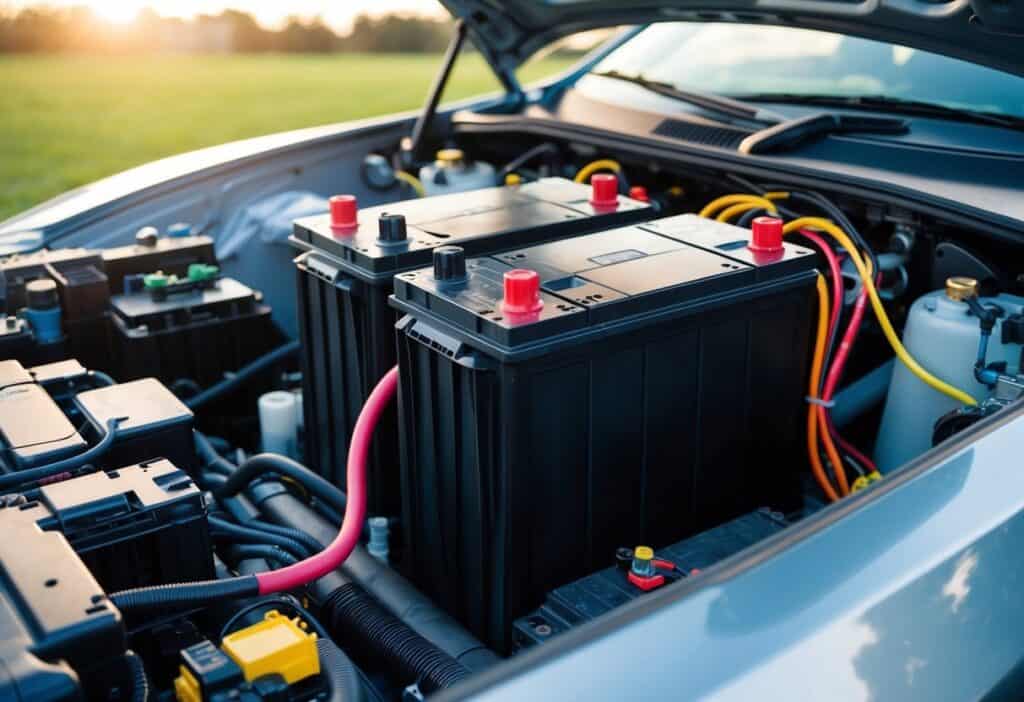
Lithium-Ion Batteries Explained
Lithium-ion batteries are the most common type used in electric cars. They work by moving lithium ions between positive and negative electrodes.
When the battery charges, lithium ions move from the positive electrode to the negative electrode. During discharge, the ions flow back, creating an electric current.
Key components of lithium-ion batteries include:
- Cathode (positive electrode)
- Anode (negative electrode)
- Electrolyte
- Separator
These batteries are popular for electric cars because they can store a lot of energy and charge quickly.
Influence of Energy Density on Weight
Energy density is a key factor in battery weight. It refers to how much energy a battery can store per unit of weight.
Higher energy density means more power in a lighter package. This is crucial for electric cars, as it affects their range and performance.
Current lithium-ion batteries have an energy density of about 100-265 Wh/kg. This is much higher than older battery types, but still results in heavy batteries.
Researchers are working to improve energy density. Their goal is to create batteries that store more power while weighing less. This would lead to lighter, more efficient electric cars.
Check out Are Electric Cars More Dangerous in a Crash?
Weight Factors for EV Batteries
Electric car batteries are heavy due to their complex components and energy storage requirements. The weight is linked to the battery’s capacity and the materials used in its construction.
Components of EV Batteries
EV batteries consist of several parts that add to their weight. The main component is the battery cells, which contain the energy-storing materials. These cells are grouped into modules, and multiple modules form the battery pack.
The battery pack also includes:
- A sturdy casing for protection
- Cooling systems to manage temperature
- Battery management system for monitoring
- Wiring and connectors
Lithium-ion batteries are common in EVs. They use materials like lithium, cobalt, and nickel. These materials are dense, which increases the battery’s weight.
Role of Kilowatt-Hours in Battery Weight
Kilowatt-hours (kWh) measure an EV battery’s energy capacity. More kWh means more range, but it also means more weight.
A typical rule of thumb:
- 1 kWh of battery capacity ≈ 6-7 kg of weight
For example:
- A 60 kWh battery might weigh about 360-420 kg
- A 100 kWh battery could weigh around 600-700 kg
Electric SUVs often have larger batteries to power their bigger size. This leads to heavier vehicles overall. As battery tech improves, we may see lighter batteries with the same or better energy capacity in the future.
Check out Can Electric Cars Be Repaired After an Accident?
Challenges of High-Capacity Batteries
Electric car batteries face key issues around weight and performance. Bigger batteries provide more range but add significant mass to vehicles.
Trade-Offs Between Range and Weight
Electric cars need large battery packs to travel long distances. More battery cells mean more range, but also more weight. A typical EV battery weighs 1,000 pounds or more.
This creates a dilemma for car makers. They want to offer good range to compete with gas cars. But heavy batteries reduce efficiency.
Some EVs now have 300+ mile ranges. The Ford F-150 Lightning can go up to 320 miles on a charge. Its battery pack weighs around 1,800 pounds.
Impact of Weight on Vehicle Performance
Extra battery weight affects how EVs drive and handle. It can make the car feel less agile. Acceleration may be slower.
Heavy batteries also put more stress on other parts. Tires wear out faster. Brakes work harder to stop the vehicle.
The added weight reduces the car’s payload capacity too. This limits how much cargo or how many passengers it can carry.
Car makers use lightweight materials to offset battery mass. But this raises costs. They also work to make batteries more energy-dense. This allows for smaller, lighter packs.
Charging Considerations and Costs
Electric car batteries need special charging setups. The costs and methods of charging can vary. Let’s look at home charging options and the expenses linked to battery charging.
Home Charging Infrastructure
Setting up a home charging station is key for electric car owners. A basic Level 1 charger uses a standard 120-volt outlet. It’s slow but cheap to install. A Level 2 charger needs a 240-volt outlet. It charges faster but costs more to set up.
Level 2 chargers can fully charge a car overnight. They typically cost $500 to $2,000, plus installation fees. Some electric companies offer rebates for home charger setups.
Cost Analysis of Battery Charging
The cost to charge an electric car varies by location and electricity rates. On average, it’s cheaper than gas for a similar trip. Home charging is often the most cost-effective option.
Public charging stations may charge by the kilowatt-hour or by time. Prices can range from free to about $0.30 per kilowatt-hour. Fast-charging stations are more expensive but charge batteries quicker.
Yearly charging costs depend on driving habits and local electricity prices. Most EV owners spend $300 to $800 per year on charging. This is often less than fuel costs for gas-powered cars.
Battery Technology Advancements
Electric car battery tech is getting better all the time. New types of batteries and improvements to existing ones are making electric vehicles (EVs) more practical and appealing.

Solid-State Batteries and Future Innovations
Solid-state batteries are a big leap forward for EVs. They use solid electrolytes instead of liquid ones. This makes them safer and more stable. They can also store more energy in less space.
Solid-state batteries charge faster too. Some might reach 80% charge in just 15 minutes. They last longer than current lithium-ion batteries, which means fewer replacements.
Car makers are racing to perfect this technology. Toyota plans to launch solid-state batteries in hybrid cars by 2025. Other companies are not far behind.
Improvements in Electric Car Battery Tech
Today’s lithium-ion batteries are much better than they were a few years ago. They can now power cars for over 400 miles on a single charge. This is thanks to better materials and design.
Battery management systems have improved too. They help batteries last longer and perform better in different temperatures. Some new batteries can charge to 80% in under 30 minutes.
Researchers are also working on new cathode materials. These could boost energy density by up to 50%. This means lighter batteries that still pack a punch.
Recycling tech is getting better too. It helps recover valuable materials from old batteries. This makes EVs more eco-friendly and could lower battery costs.
Recycling and Environmental Impact
Electric car batteries have a big effect on the environment. Their recycling and reuse are key to reducing this impact. Smart practices can help make battery use more sustainable.
The Second Life of EV Batteries
EV batteries can have a useful life after cars. They often keep 70-80% of their capacity when removed from vehicles. This leftover power works well for other jobs.
Old car batteries can store energy for homes or businesses. They can back up power grids too. This “second life” use saves resources and cuts waste.
Companies are finding new ways to reuse these batteries. Some turn them into power banks for buildings. Others use them to store solar or wind energy.
Reusing batteries helps the environment. It reduces the need for new batteries and saves raw materials.
Sustainable Practices in Battery Use
Good battery care can make them last longer in cars. This cuts down on waste and the need for new batteries.
Proper charging habits are important. Avoiding extreme heat or cold helps too. These steps can add years to a battery’s life.
Recycling is crucial when batteries can’t be used anymore. It recovers valuable metals like cobalt and lithium. This process cuts mining impacts and saves energy.
New recycling methods are getting better. They can now recover up to 95% of battery materials. This makes electric cars much greener over their whole life.
Smart design is also key. Making batteries easy to take apart helps recycling. It also makes reusing parts simpler.
Comparison With Other Vehicle Types
Electric cars have heavier batteries than other vehicle types. This affects their weight and performance compared to traditional gas-powered cars and hybrids.
Electric Vehicles Versus Plug-In Hybrids
Electric vehicles (EVs) are typically heavier than plug-in hybrids. EVs rely solely on large battery packs for power. Plug-in hybrids have smaller batteries and gas engines.
A typical EV battery weighs 400-500 kg. Plug-in hybrid batteries are much lighter at 150-200 kg. This makes the average EV about 20-30% heavier than a similar plug-in hybrid model.
EVs make up for added weight with instant torque and no need for gas. Plug-in hybrids offer longer range thanks to their gas engines. They can switch between electric and gas power as needed.
Electric SUVs and Their Battery Requirements
Electric SUVs need even bigger batteries than electric cars. Their size and weight demand more power to move efficiently.
A typical electric SUV battery weighs 500-700 kg. This is about 100-200 kg more than batteries in electric sedans.
Larger battery packs allow electric SUVs to match the range of smaller EVs. But they also make these vehicles very heavy. An electric SUV can weigh over 2,500 kg total.
The GMC Hummer EV is an extreme case. Its huge 200+ kWh battery helps it weigh over 4,000 kg. That’s twice as heavy as some gas-powered SUVs.
Frequently Asked Questions
Electric car batteries raise many questions about their weight and impact. Here are answers to some common inquiries about EV battery weight and its effects.
What contributes to the heavy weight of electric car batteries?
The main factor is the battery cells. These contain dense materials like lithium, nickel, and cobalt. The battery pack also needs a sturdy casing for protection. Cooling systems add more weight too.
How does the weight of electric car batteries compare to internal combustion engines?
EV batteries are much heavier than gas engines. A typical EV battery can weigh 1,000 pounds or more. Most gas engines weigh 300-600 pounds. This extra weight affects car design and performance.
Is the weight of electric cars generally higher than gasoline cars?
Yes, electric cars tend to be heavier. The battery pack adds significant weight. For example, an electric SUV might weigh 1,000-2,000 pounds more than a similar gas-powered model.
How much does an average electric car battery weigh in kilograms?
An average EV battery weighs around 450-540 kilograms (1,000-1,200 pounds). Larger vehicles like SUVs may have batteries weighing up to 750 kilograms (1,650 pounds) or more.
Are there technological advancements on the horizon that might reduce the weight of EV batteries?
Scientists are working on lighter battery materials. Solid-state batteries could cut weight by 20-30%. New designs might use less metal. These changes could make EV batteries much lighter in the future.
What are the implications of battery weight on electric vehicle performance and efficiency?
Heavy batteries affect range and handling. More weight means the car uses more energy to move. This can reduce driving range. Extra weight also impacts braking and cornering. But the low center of gravity from floor-mounted batteries can improve stability.
Conclusion
Electric car batteries are heavy for good reasons. Their size and weight allow EVs to travel long distances on a single charge. The batteries store large amounts of energy to power the vehicle.
While the extra weight impacts handling and range, it provides important benefits. The low center of gravity improves stability. The batteries also act as a safety feature, protecting passengers in collisions.
Automakers are working to reduce battery weight through new designs and materials. As technology improves, EV batteries will likely become lighter and more efficient over time.
For now, the advantages of electric vehicles outweigh the drawbacks of heavy batteries for many drivers. EVs offer lower emissions, quieter operation, and less maintenance than gas-powered cars.
The auto industry continues to innovate. Future electric cars may strike an even better balance between battery capacity, vehicle weight, and overall performance.

Hi, I’m Marybeth, an electric car enthusiast living in New York in the USA. As the owner of electriccartalks.com, I love sharing my knowledge on EV tips, battery maintenance, and charging solutions. As a proud Tesla owner, I blend my personal experiences with professional insights to offer valuable information to fellow EV enthusiasts. Through my articles, I aim to empower others to make informed decisions about their electric vehicles. Read more