
Many Tesla owners dream of having a Supercharger at home for ultra-fast charging. While it’s a cool idea, it’s not really possible for most people. Tesla doesn’t sell Superchargers to individuals, and installing one would cost over $20,000 plus hefty electrical upgrades.
Instead, Tesla recommends home charging options that are more practical and affordable. A standard wall outlet provides slow charging at about 3 miles of range per hour. For faster home charging, Tesla offers Wall Connectors that can add up to 30 miles of range per hour when paired with a 240-volt outlet.
Installing a 240-volt outlet typically costs $750 to $1,500. A Tesla Wall Connector costs around $400-$500 plus installation. While not as fast as a Supercharger, these home charging setups meet most owners’ daily needs at a fraction of the cost.
Understanding Tesla Charging Options
Tesla offers several ways to charge your electric vehicle. Each option provides different charging speeds and costs. Let’s explore the main charging choices for Tesla owners.
Tesla Supercharger Overview
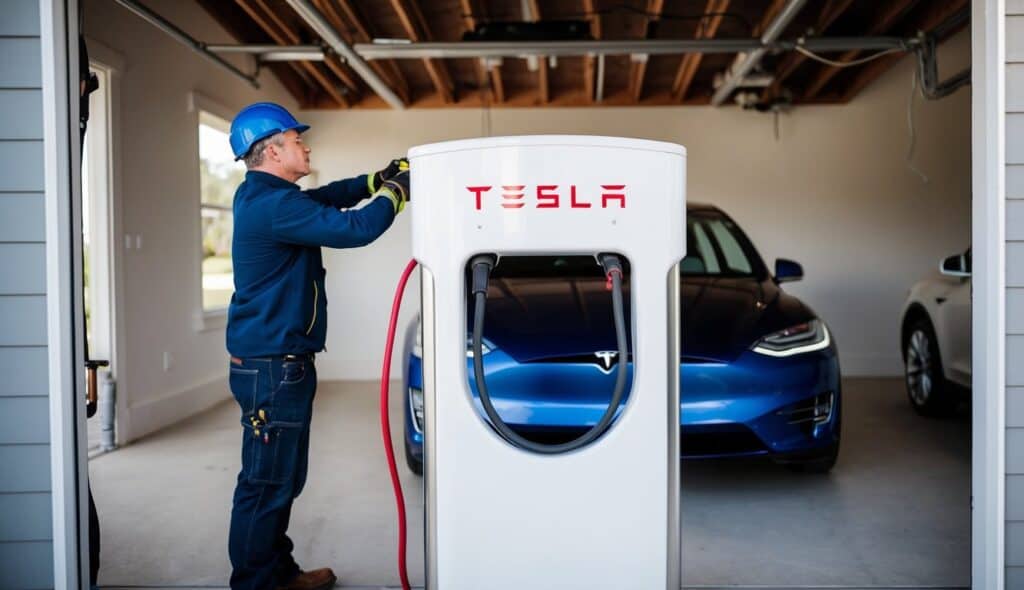
Tesla Superchargers are fast-charging stations designed for quick power-ups during long trips. They can charge a Tesla from nearly empty to 80% in 15 to 30 minutes. Superchargers are not meant for home use. They’re placed along major routes and in cities.
Superchargers cost more to use than home charging. Prices are about twice as high as charging at home. The exact cost varies by location. Tesla owners pay per kilowatt-hour of energy used.
Level 1 and Level 2 Charging Explained
Level 1 charging uses a standard 120-volt household outlet. It’s the slowest method, adding about 3 miles of range per hour. This option is good for overnight charging or when faster options aren’t available.
Level 2 charging uses a 240-volt outlet, like those for large appliances. It’s much faster, adding up to 30 miles of range per hour. Many Tesla owners install a Level 2 setup at home for daily charging.
Installing a 240-volt outlet can cost $750 to $1,500. The increased speed makes it a popular choice for home charging.
The Role of the Tesla Wall Connector
The Tesla Wall Connector is a Level 2 charger designed for home use. It costs $475 and must be installed by an electrician. The total cost, including installation, can range from $1,000 to $7,000.
Wall Connectors can deliver up to 44 miles of range per hour, depending on the Tesla model. They’re the fastest home-charging option for Tesla vehicles.
This device is hardwired to your home’s electrical system. It offers convenient, high-speed charging without plugging and unplugging a portable charger.
Check out How Many kWh to Charge a Tesla?
Tesla Supercharger Installation Prerequisites
Most people find it difficult to install a Tesla Supercharger at home. Superchargers require special equipment and a lot of power. Here are the key things to know about Supercharger setup.
Site Requirements for Supercharging
Superchargers need a big open space. Tesla looks for spots near busy roads with room for 6-12 charging stalls. Each stall needs about 3 parking spaces.
The site must have good cell service, which allows the chargers to talk to Tesla’s network. Strong WiFi is also needed as a backup.
Power is significant. Superchargers use up to 250 kW per stall, which is way more than a house can handle. Most homes only have 100-200 amp service total.
Understanding Electrical Infrastructure
Superchargers need industrial-level power. This means working with the local power company to bring in high-voltage lines.
A big transformer is needed to change the power to the right voltage. This can cost $50,000 or more by itself.
Special wiring and safety gear are also required. The electrical work alone costs $100,000+.
Because of these needs, Superchargers are only built in commercial areas. Homes can’t safely or legally support this much power.
Cost Factors for Home Supercharger Installation
Installing a Tesla Supercharger at home involves several key expenses. These costs can add up quickly and vary based on your specific situation and location.
Hardware and Component Costs
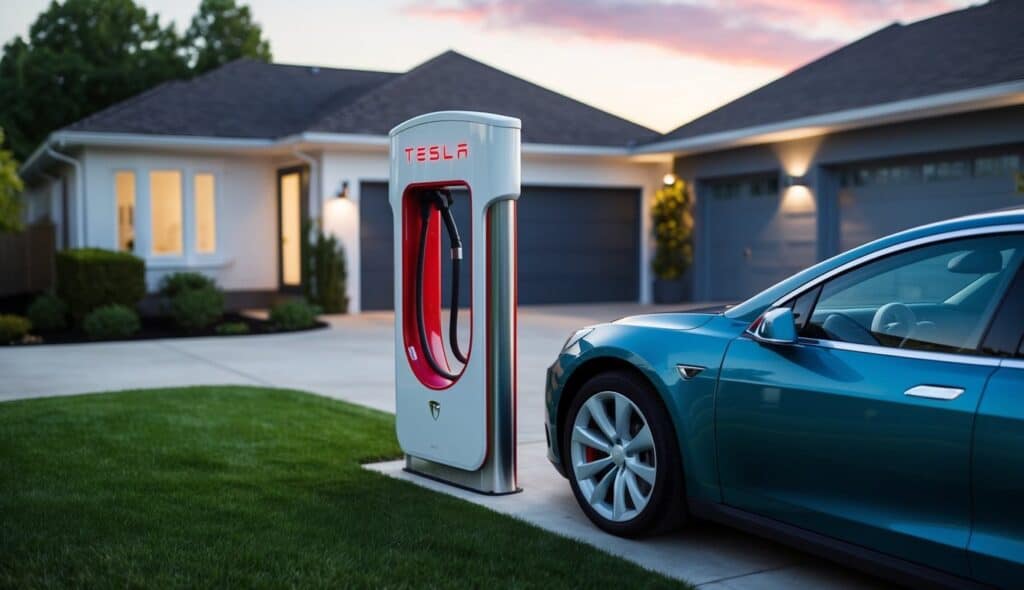
The hardware for a home Supercharger is expensive. Tesla doesn’t sell Superchargers to individuals, but similar high-power chargers can cost $20,000 or more. This price doesn’t include extra electrical equipment that may be needed.
Some less powerful Tesla Destination Chargers have been sold for around $75,000. These prices show how costly the technology can be.
Regular home charging options like the Tesla Wall Connector are much cheaper, costing about $400-$500. But these aren’t superchargers, and they charge much slower.
Labor and Installation Charges
Installing a high-power charger requires skilled electricians. The work is complex and time-consuming.
Labor costs can range from $1,000 to $5,000 or more, depending on the job’s difficulty and local labor rates.
The installation may involve:
- Upgrading your home’s electrical panel
- Running new wiring
- Digging trenches for underground cables
- Setting up a separate meter
These tasks add to the total labor costs. The more work needed, the higher the price will be.
Permitting and Inspection Fees
To install a high-power charger at home, you’ll need permits. These permits ensure that the installation meets local safety codes.
Permit costs vary by location. They can range from $100 to $1,000 or more.
After installation, you’ll need inspections. An inspector will check that everything is safe and up to code. Inspection fees are often separate from permit costs.
Some areas may require multiple inspections. This can increase the total fees you’ll pay.
Demand Charges and Electricity Rates
Once installed, running a Supercharger can be costly due to high electricity use.
Demand charges are fees based on your peak power usage. These can be very high for Superchargers, which draw a lot of power quickly.
Your regular electricity rates will also impact ongoing costs. Rates vary by location and time of day.
Some utility companies offer special EV charging rates. These can help lower costs, but may not apply to high-power chargers.
Consider time-of-use plans to save money. Charging during off-peak hours can be much cheaper.
Check out Tesla Model 3 Performance
Installation Process and Steps
Setting up a Tesla Supercharger at home is complex. It needs careful planning and expert help. The process involves several key steps to ensure safe and proper installation.
Consultation and Site Assessment
A Tesla-certified technician visits the home to check the site. They look at the electrical system and space for the charger, measure the distance from the electrical panel to the charger spot, and check if the home’s power supply can handle the Supercharger’s needs.
The tech discusses any needed upgrades, such as a new electrical panel or wiring changes, and explains the costs and time required for these upgrades.
Electricity Upgrades and Preparation
Most homes need major electrical upgrades for a Supercharger. This often means installing a new high-capacity electrical panel, and the home might need a dedicated transformer from the power company.
An electrician runs thick cables from the panel to the charger location. They may need to dig trenches or drill through walls. This step can take several days and be quite disruptive.
Actual Supercharger Setup
Once the electrical work is done, the Supercharger unit is installed. This large box is mounted on a strong base, often made of concrete. The unit is connected to the new electrical supply.
The installer sets up the charger’s software and network connection. They link it to the home’s Wi-Fi for updates and monitoring.
Operational Testing and Validation
After setup, the installer runs tests to ensure the Supercharger works properly. They check the power output and safety systems, and the charger is tested with a Tesla car to ensure proper charging.
The homeowner learns how to use the charger safely, receives information on maintenance and troubleshooting, and is helped by the installer to set up the Tesla app for charger control and monitoring.
Optimizing Your Supercharger Experience
Tesla owners can make the most of their Supercharger visits by focusing on a few key areas. Smart charging habits help save time and money while keeping your Tesla ready for the road.
Maximizing Charging Speeds
To charge your Tesla faster, arrive with a 10-20% battery level. The charging speed is highest when the battery is nearly empty. As your battery fills up, the charging rate slows down.
If possible, pick a less busy time to charge. When many cars are charging at once, the power may be split between stalls, leading to slower speeds.
Check your Tesla’s route planner before long trips. It will suggest ideal charging stops to minimize your overall travel time.
Precondition your battery before charging on cold days. Use the Tesla app to warm up the battery while driving to the Supercharger. This helps the battery accept charge more quickly.
Mitigating Idle Fees
Tesla charges idle fees when you leave your car at a Supercharger after charging. These fees start when the station is at least 50% full. To avoid extra costs:
- Set a reminder on your phone to move your car once it’s charged.
- Use the Tesla app to track your charging progress.
- Move your car to a regular parking spot when charging is complete.
- If you can’t move right away, use the app to pause charging just before it finishes.
Idle fees can add up quickly, so staying alert helps keep your charging costs down.
Utilizing the Tesla App for Efficient Charging
The Tesla app is a powerful tool for Supercharger users. It lets you:
- Find nearby Superchargers and see how many stalls are open.
- Start and stop charging remotely.
- Get alerts when your car is done charging.
- Pay for charging sessions easily.
Before your trip, use the app to plan your route with Supercharger stops. This helps you avoid range anxiety and find the best places to charge.
The app shows your current charge level and estimated time left during charging. This makes it easy to plan your break and return to your car at the right time.
Frequently Asked Questions
Tesla home charging options have several key considerations. Costs, installation requirements, charging speeds, and potential incentives all factor into the decision.
What is the average installation cost for a Tesla Wall Connector?
Installing a Tesla Wall Connector typically costs between $750 and $1,500. This price includes both the device and professional installation. The final cost depends on your home’s electrical setup and any necessary upgrades.
Can you install a Tesla Supercharger at your home, and if so, what are the associated costs?
Tesla Superchargers cannot be installed in homes. These high-powered chargers are designed for public use only. They require industrial-grade electrical infrastructure that is not suitable for residential settings.
How much does installing a 240v electric vehicle charging outlet cost?
Installing a 240v outlet for EV charging usually costs $500 to $1,500. The price varies based on your home’s electrical panel capacity and the outlet’s location. Older homes may need electrical upgrades, which can increase costs.
What are the expenses involved in setting up a Tesla home charging station?
Setting up a Tesla home charging station involves several expenses. These include the charging unit, installation costs, and potential electrical upgrades. Depending on your specific situation, the total cost typically ranges from $1,000 to $2,500.
How long does a full charge take when using a Tesla home charging solution?
Charging times vary depending on the Tesla model and charging equipment. Most Tesla models can fully charge overnight with a 240v outlet. A Wall Connector can add up to 44 miles of range per hour of charging.
Are there incentives or reimbursements available for installing a Tesla charging station at home?
Many areas offer incentives for home EV charger installation, such as tax credits, rebates, or grants. Check with local utilities, state energy offices, and federal programs for available incentives in your area.
Conclusion
Installing a Tesla Supercharger at home is not feasible for most people. The cost is extremely high, often reaching tens of thousands of dollars, making it out of reach for the average homeowner.
Tesla does not sell Superchargers to individuals. These chargers are designed for commercial use and public charging stations. The company focuses on providing them in strategic locations for long-distance travel.
Tesla offers more practical options for home charging. The Wall Connector is a popular choice. It provides fast charging speeds at a much lower cost than a Supercharger.
Most Tesla owners find home charging meets their daily needs. A standard 240V outlet or Wall Connector can easily recharge the car overnight, making this setup far more cost-effective and convenient for regular use.
Public Superchargers remain the best option for quick charging on long trips. Tesla continues to expand its network, making these stations widely available for travelers.
Hi, I’m Marybeth, an electric car enthusiast living in New York in the USA. As the owner of electriccartalks.com, I love sharing my knowledge on EV tips, battery maintenance, and charging solutions. As a proud Tesla owner, I blend my personal experiences with professional insights to offer valuable information to fellow EV enthusiasts. Through my articles, I aim to empower others to make informed decisions about their electric vehicles. Read more